
Reverse Sear Pork Tenderloin
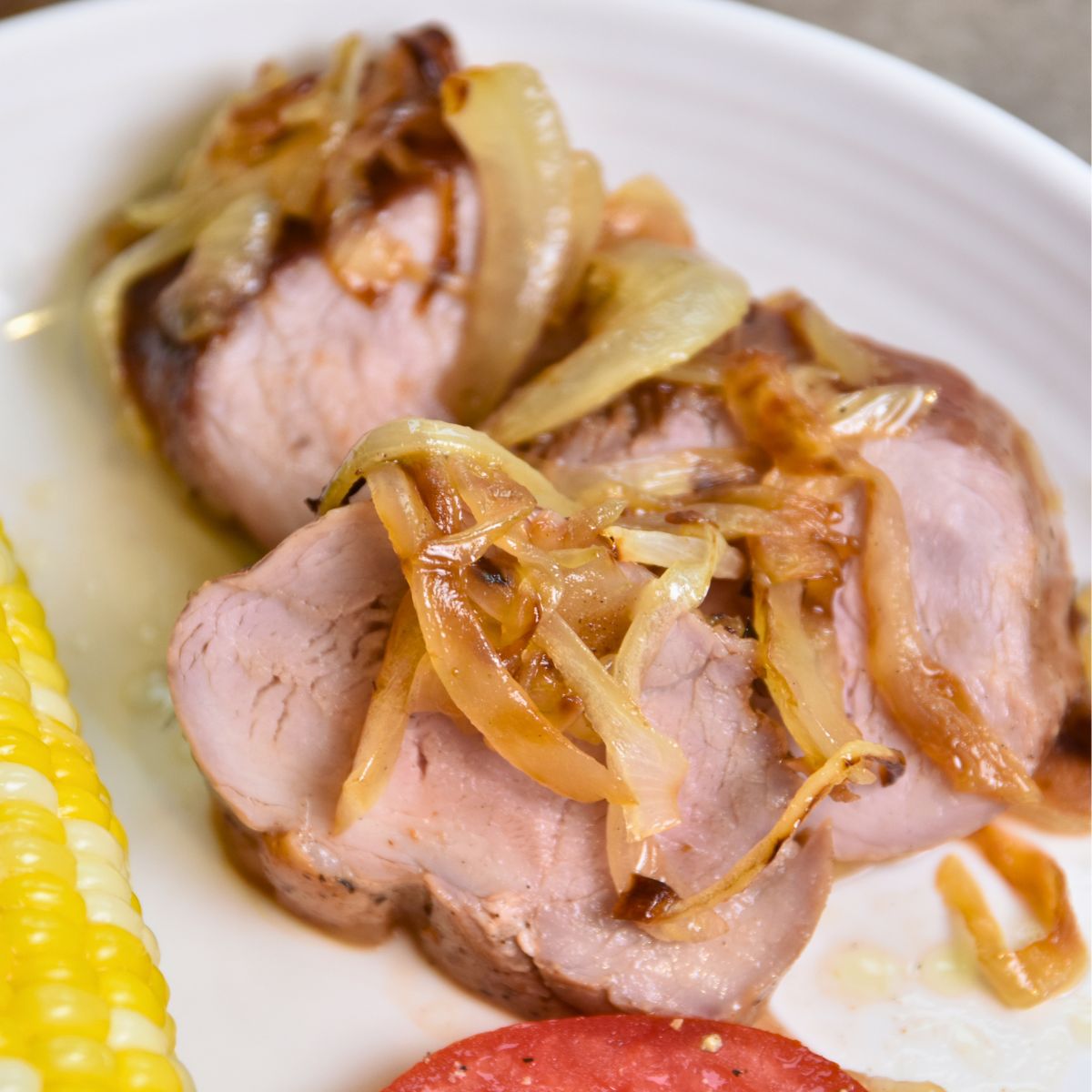
Say goodbye to dry pork. This easy Reverse Sear Pork Tenderloin recipe guarantees a perfectly tender, juicy center with a gorgeous, buttery herb sauce.
Why Reverse Searing is the Secret to Perfect Pork Tenderloin
Pork tenderloin is notoriously easy to overcook, turning a potentially elegant dinner into something resembling a hockey puck. But what if I told you there's a foolproof method that guarantees a perfectly juicy, edge-to-edge pink center every single time?
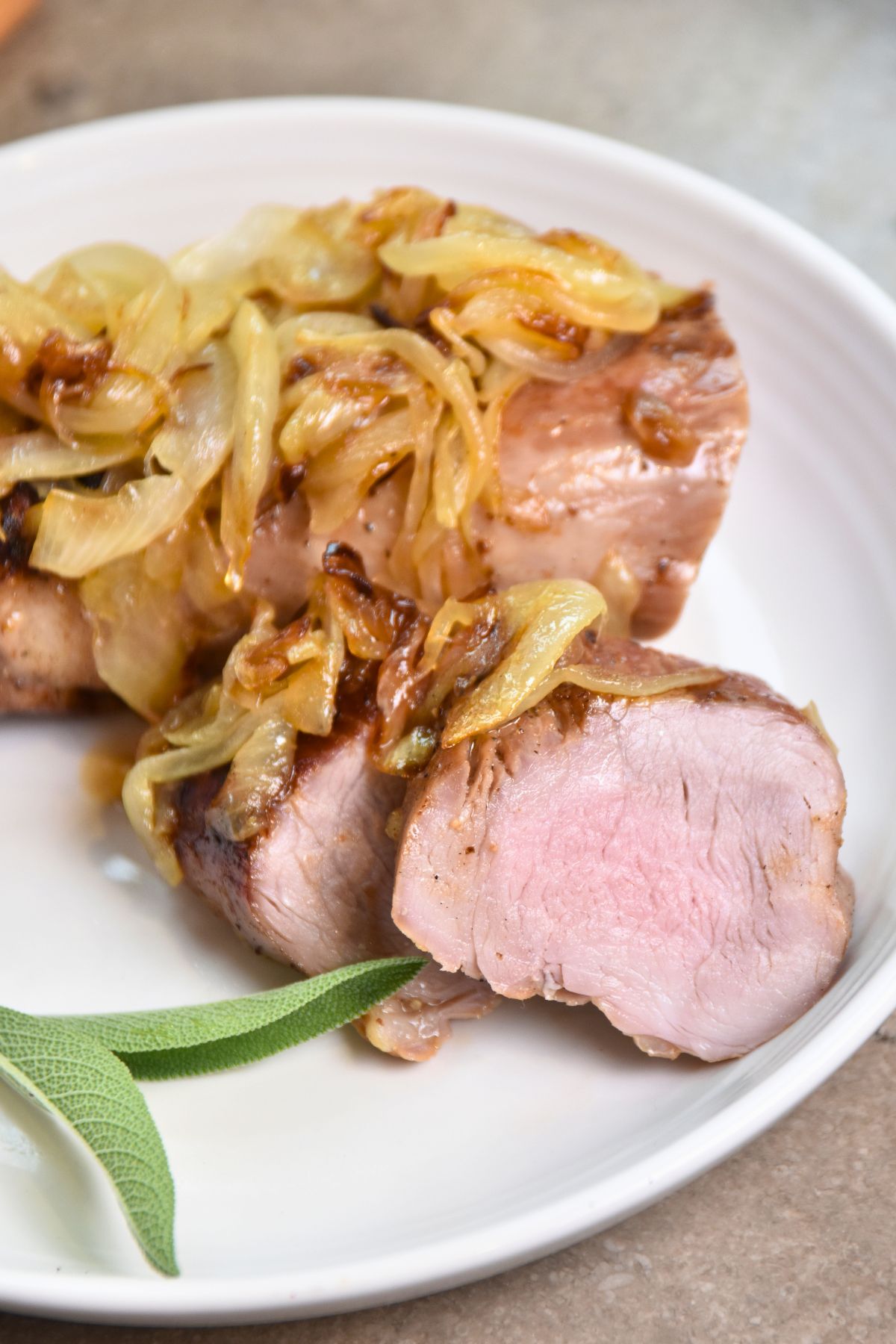
Enter the Reverse Seared Pork Tenderloin. By slow-roasting the meat at a low temperature first, we lock in all those precious juices before finishing it in a screaming-hot skillet. To take things to the next level, we're basting this tenderloin in a foaming, fragrant sage butter and topping it with deeply sweet, caramelized Vidalia onions. It looks and tastes like a restaurant-quality meal, but it requires less than 35 minutes of actual hands-on cooking time.
The Ingredients (And Why They Matter)
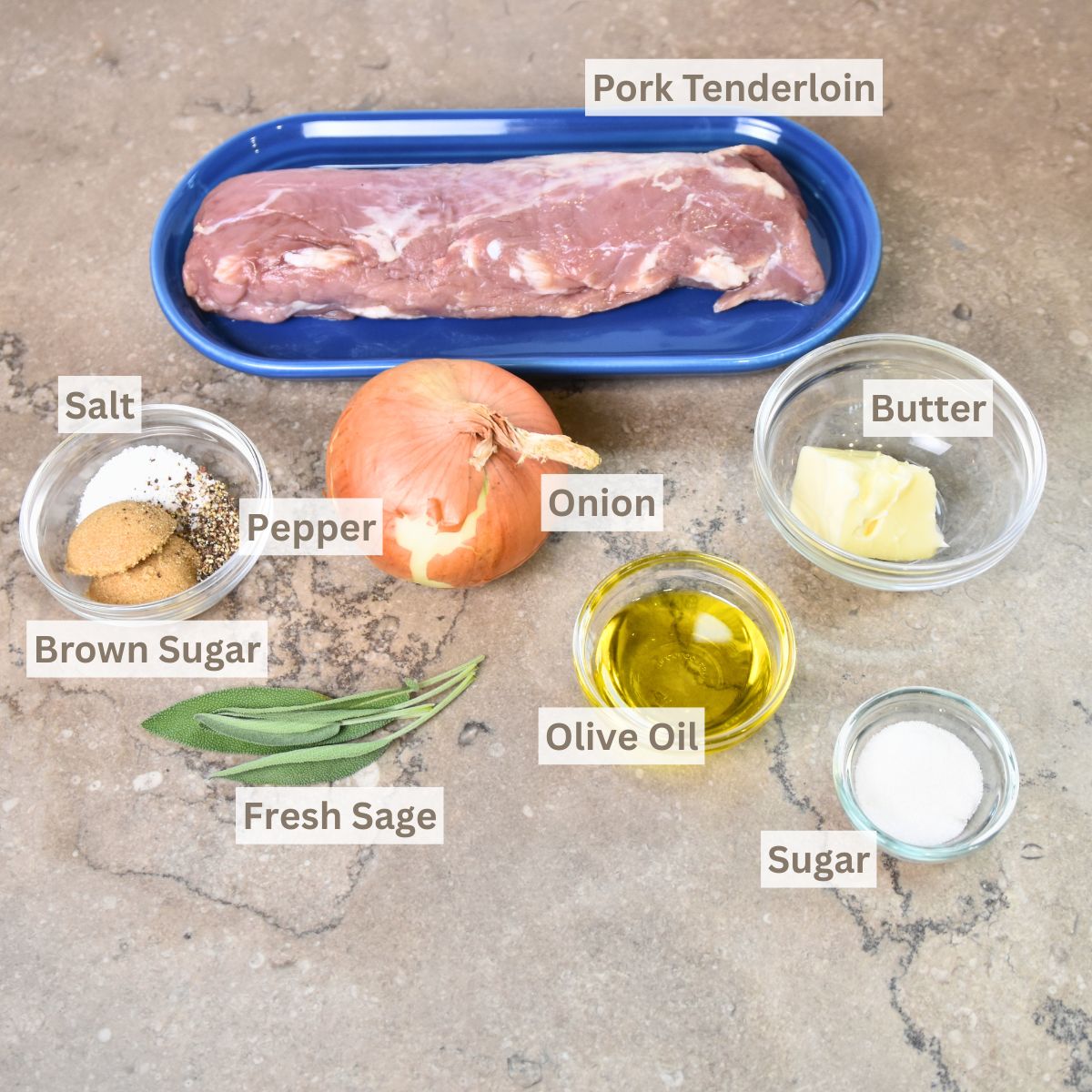
To make this recipe, you only need a handful of simple ingredients, but each one plays a major role in building deep flavor.
- Pork Tenderloin: Lean, tender, and incredibly receptive to flavor. Make sure you buy a tenderloin and not a loin roast - they are completely different cuts!
- Brown Sugar & Kosher Salt: This creates our quick dry brine. The salt draws moisture out, dissolves the sugar, and pulls that savory-sweet goodness deep into the meat while keeping it juicy.
- Vidalia Onion: These sweet onions caramelize beautifully, providing a rich, jammy counterpoint to the savory pork.
- Olive Oil & Butter: We use olive oil for its higher smoke point during the hard sear, and butter at the very end for rich, foaming flavor during the baste.
- Fresh Sage Leaves: Tossing fresh sage into the hot butter infuses the fat with an earthy, piney aroma that complements pork perfectly. You can use fresh rosemary or thyme, if you prefer.
See recipe card for quantities.
How to Reverse Sear Pork Tenderloin (Step-by-Step)
The reverse sear sounds fancy, but it's actually incredibly low-stress. Here is exactly how it breaks down:
Step 1: The Dry Brine (Pre-Seasoning)
Pat your tenderloin completely dry with paper towels - moisture is the enemy of a good crust. Rub it generously with your brown sugar, kosher salt, and black pepper. Place it on a wire rack over a baking sheet and refrigerate it uncovered for at least 2 hours. This dries out the surface of the meat so it sears beautifully later.
Step 2: Take off the Chill & Preheat
Pull the pork out of the fridge about 30 to 45 minutes before you want to cook to let it come up to room temperature. Meanwhile, heat your oven to a low 250°F.
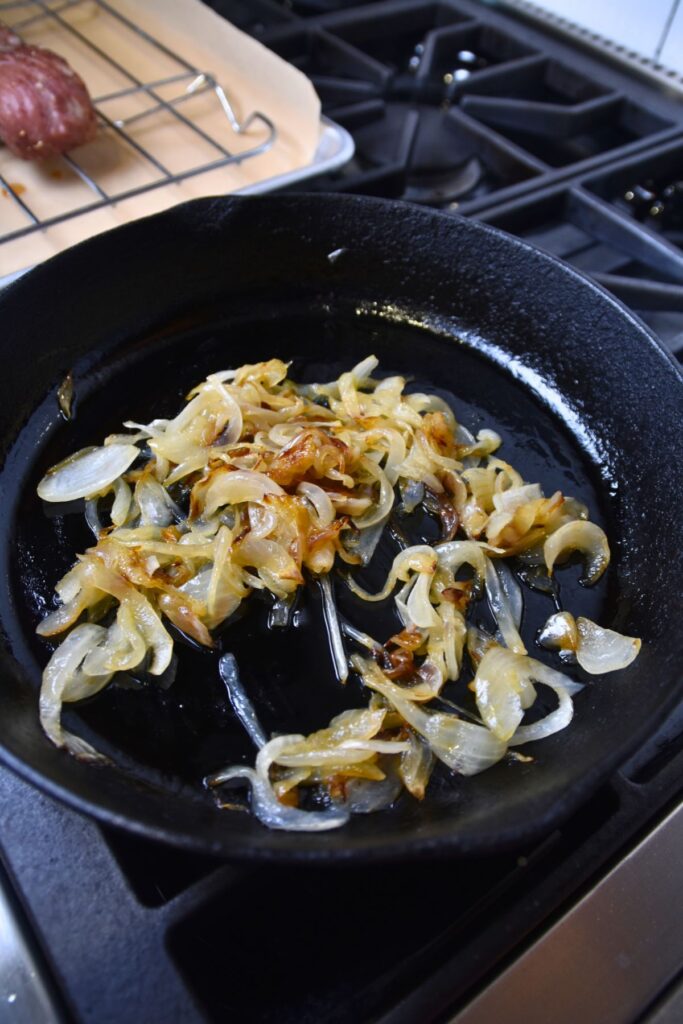
Step 3: Melt-in-Your-Mouth Caramelized Onions
While the oven heats, get your onions going. Sauté the thinly sliced Vidalia onions in olive oil with a pinch of sugar and salt. Cook them over medium heat, stirring often, until they are soft, sweet, and deeply golden brown. Scoop them out, but leave that delicious flavored oil behind in the skillet.
Step 4: The Low & Slow Roast
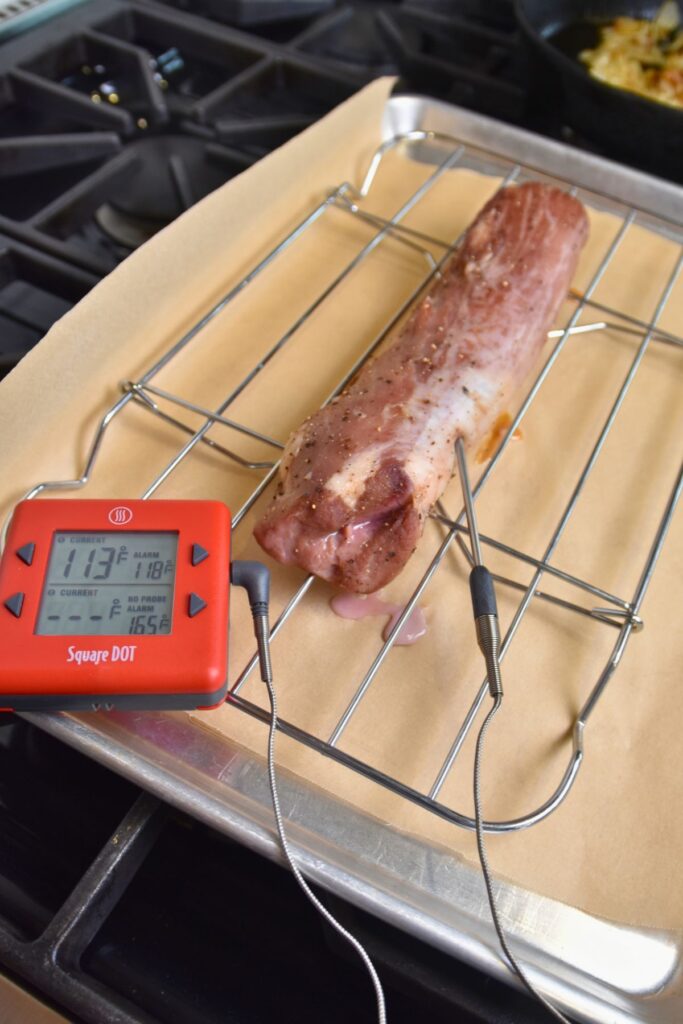
Pop the pork into the oven. We're cooking it low and slow for about 20 to 30 minutes until the internal temperature hits 110°F to 120°F. Keep a close eye on it with a meat thermometer - it goes fast.
Step 5: The Grand Finale (Sear & Butter Baste)
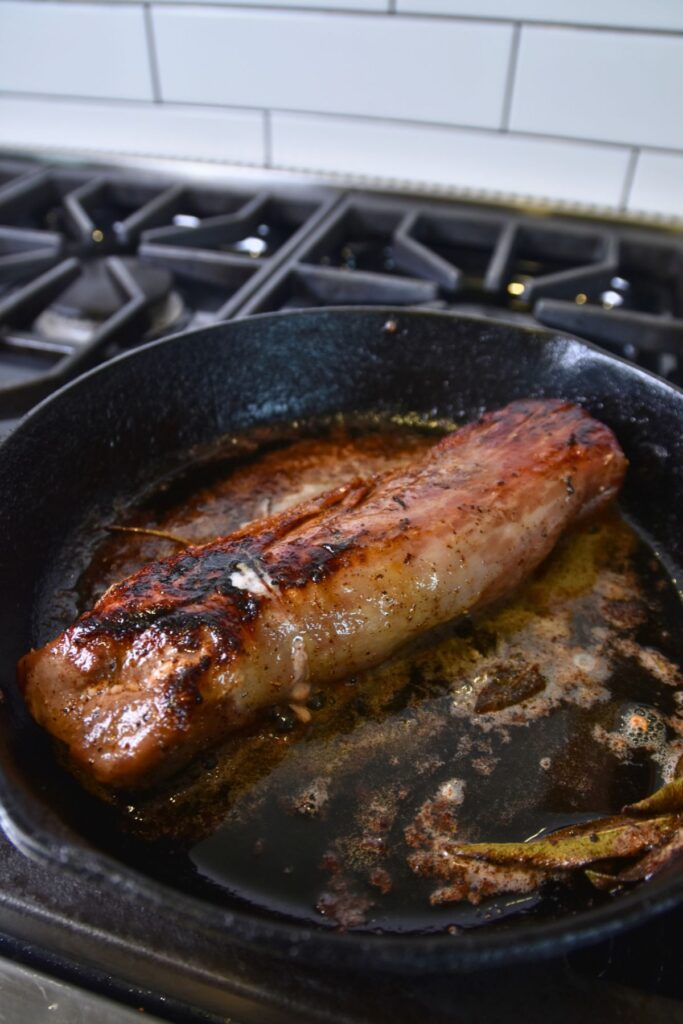
Get that onion-infused skillet smoking hot over medium-high heat. Drop the pork in and sear for 1.5 minutes until a gorgeous color and crust forms. Flip it, then immediately drop in the butter and fresh sage leaves. As the butter foams up, tilt the pan and spoon that glorious, fragrant sage butter over the top of the pork for another 1.5 minutes.
Step 6: Rest and Serve
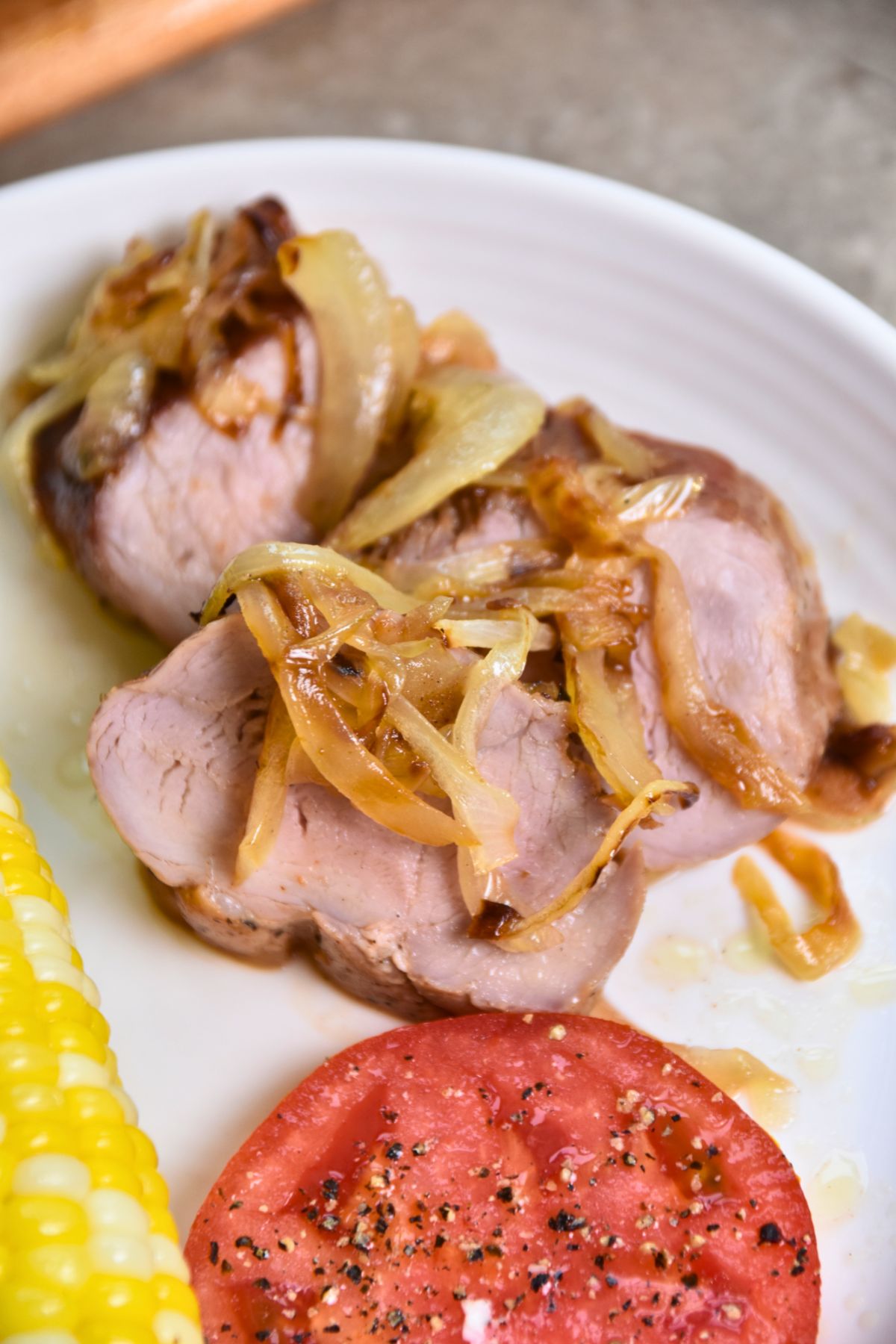
Remove the pork at 140°F to 143°F and let it rest on a warm plate for 3 to 5 minutes. The temperature will carry over to a perfectly safe and juicy 145°F. Slice it up, smother it in those caramelized onions, and serve.
Pro Tip: Don't skip the wire rack during the dry brine! It allows air to circulate completely around the meat, ensuring the underside dries out just as well as the top for an even sear.
Cooking for One or Two
The pork tenderloin is the perfect cut for a smaller crowd. No endless leftovers with this small, and beautiful cut of pork.
The "In a Pinch" Ingredient Swaps
- The Sage Backup - If you don't have fresh sage leaves, you can toss a sprig of fresh rosemary or thyme into the foaming butter.
- The Vidalia Swap - Can't find Vidalia onions? Any standard yellow onion or sweet onion will work beautifully. If you want a slightly sharper, punchier flavor profile that sweetens up as it cooks, you can even use red onions.
- The Sweetener Alternative - Out of brown sugar? You can swap it for honey or maple syrup. Just skip the dry rub step with the sugar and instead brush the liquid sweetener onto the pork right before it goes into the oven.
- 🧡 Dairy-Free Friendly - This recipe easily adapts for dairy sensitivities. Simply swap the 2 tablespoons of butter for a high-quality vegan butter block (like Country Crock Plant Butter, Earth Balance or Miyoko's) during the final basting step to keep that rich, foaming texture without the dairy.
Level Up Your Pork Tenderloin - Creative Variations
The Bistro Wine Deglaze - Want to make it extra fancy for a dinner party? After removing the seared pork from the pan, pour in a splash of dry white wine or chicken stock to the sauce. Scrape up all those delicious browned bits, let it reduce by half, and stir the caramelized onions right back into the pan sauce.
The Steakhouse Mushroom Twist - Toss a cup of sliced cremini or button mushrooms into the skillet with your Vidalia onions during the last 10 minutes of caramelizing. The earthy mushrooms paired with the sweet onions elevate this to a restaurant-level topper.
The Smoky Garlic Edition - If you want a more traditional, wood-fired flavor profile for a future dinner, check out my Perfect Pulled Pork Rub.
Keep It Fresh: How to Store Your Reverse Seared Pork
Because pork tenderloin is incredibly lean, it requires a little extra care to prevent it from turning into shoe leather the next day. Here is the blueprint for keeping it juicy:
The Dryness Fix - If you are worried the pork looks a little dry when you pull it out of the fridge, don't panic. Simply splash a tablespoon of chicken broth or water over the meat, top it with the leftover onions, and cover the dish tightly with foil before heating. The trapped steam will naturally rehydrate the meat.
Can You Freeze It? - Yes, but with a catch. You can absolutely freeze cooked pork tenderloin, but it is best to freeze it whole rather than sliced to prevent it from drying out. Wrap the cooled pork tightly in plastic wrap, drop it into a heavy-duty freezer bag, and store it for up to 3 months. Thaw it overnight in the fridge before reheating.
The Container Matters - Store your leftover pork and caramelized onions together in a shallow, airtight container. Make sure to pour any leftover cutting board or pan juices right over the meat before sealing. The pork will essentially marinate in those flavorful juices, keeping it moist.
The Fridge Life - Keep it tucked away in the main compartment of your refrigerator (not on the door where the temperature fluctuates). It will stay perfectly safe, juicy, and delicious for up to 3 to 4 days.
Top Tip 🏆 The Golden Rule: Use a Digital Meat Thermometer
If you want to guarantee restaurant-quality pork every single time, you have to ditch the guessing games. Here is the blueprint for getting it right:
Don't Rely on the Clock - Pork tenderloins vary wildly in shape, thickness, and starting temperature. One might take 20 minutes to hit the sweet spot while another takes 35. Cooking purely by time is the fastest way to accidentally overcook your dinner.
The Pull Temperature - The magic number for reverse searing is 143°F. Pull the pork out of the hot skillet the exact second your digital thermometer hits this mark. Do not wait until it reaches 145°F in the pan, or it will end up overcooked by the time you eat.
Trust the Carryover Cook - Once you remove the pork from the heat and let it rest on a warm plate, carryover cooking takes over. The internal temperature will naturally continue to rise 2 to 3 degrees while it sits, landing you perfectly at the USDA-recommended, ultra-safe, and incredibly juicy 145°F.
Embrace the Pink - Don't freak out if your sliced pork has a lovely, slight blush of pink in the center! Thanks to updated food safety guidelines, a little pink is not only completely safe, but it's actually proof that you cooked it perfectly.
FAQ
Can I use a pork loin instead of a pork tenderloin? - Yes and No, they are different cuts. A pork loin is much larger, thicker, and has a different fat distribution. While you can follow this method for a pork loin, it requires a longer slow-roasting time in the oven. Therefore, it will require time adjustments.
When you slow-roast the meat first, the low heat dries out the moisture on the surface of the pork. Because dry meat sears much faster than wet meat, you get a gorgeous, deeply browned caramelized crust in the skillet in under 3 minutes without overcooking the inside.
Nope. Don't rush the process. True caramelization takes time because the natural sugars in the Vidalia onions need to break down slowly. If they look dry or start to scorch, drop the heat to medium-low and add a tiny splash of water to the skillet. The water will instantly scrape up the browned bits and help the onions soften uniformly.
Yes, absolutely. The USDA updated its safety guidelines years ago, confirming that whole cuts of pork (like this tenderloin) are completely safe to consume at an internal temperature of 145°F followed by a 3-minute rest. At this temperature, the pork will have a beautiful, juicy, light pink blush in the center.
Master the Cut: More Ways to Cook Pork



New Recipes to Try
Here's our newest recipes for you to try.


Share the Love
Leave a comment and I'll do my best to answer you!
And, if you made this recipe, please let me know how you liked it by leaving a comment and/or giving a rating!
And of course, if you do make this recipe, tag @laughingroostereats on Instagram and hashtag it #laughingroostereats ! Seeing your photos is our favorite thing!
Reverse Sear Pork Tenderloin
Ingredients
Method
- Dry Brine: Pat the pork tenderloin dry with paper towels. Sprinkle generously with the brown sugar, 1 ½ teaspoons of kosher salt, and black pepper. Place the tenderloin on a wire rack set inside a rimmed baking sheet. Refrigerate, uncovered, for at least 2 hours (or up to 24 hours).1 pound pork tenderloin, 2 Tablespoon brown sugar, 1 ½ teaspoon kosher salt, ½ teaspoon ground black pepper
- Prep & Preheat: Remove the pork tenderloin from the refrigerator and let it sit at room temperature for 30 to 45 minutes to take the chill off. Meanwhile, preheat your oven to 250°F.
- Caramelize the Onions: Add 1 Tablespoon olive oil to a large skillet and add onions. Add the granulated sugar and ½ teaspoon of salt. Cook over medium heat, stirring frequently, until the onions are tender, deeply browned, and caramelized. Set aside when deeply caramelized leaving oil behind in the skillet.1 medium Vidalia onion, 1 Tablespoon Olive Oil, 1 teaspoon granulated sugar, ½ teaspoon kosher salt
- Slow Roast: Bake the tenderloin for about 30 minutes, or until the internal thermometer registers 110°F to 120°F. Note: Start checking after 20 minutes to prevent overcooking. Remove the baking sheet from the oven.
- Sear & Baste: Heat the remaining 2 Tablespoons of olive oil in the same skillet as the onions over medium-high heat until very hot and just starting to smoke.2 Tablespoon Olive Oil
- Place the tenderloin in the hot skillet and sear until beautifully browned, about 1 ½ minutes. Flip. Immediately add the butter and fresh sage leaves to the pan. Tilt the skillet slightly and use a large spoon to continuously baste the tenderloin with the foaming sage butter for another 1 ½ minutes. Internal temperature should be 143℉.2 Tablespoon butter, 4 to 6 fresh sage leaves
- Rest the Meat: Remove the tenderloin from the skillet and transfer to a cutting board or warm plate. Allow it to rest for 3 to 5 minutes. Internal temperature will continue to rise to 140℉
- Serve: Slice the juicy tenderloin and top generously with the savory caramelized onions.



It would take a lot of convincing to get me to ever make pork tenderloin another way.