
Homemade Pappardelle Pasta
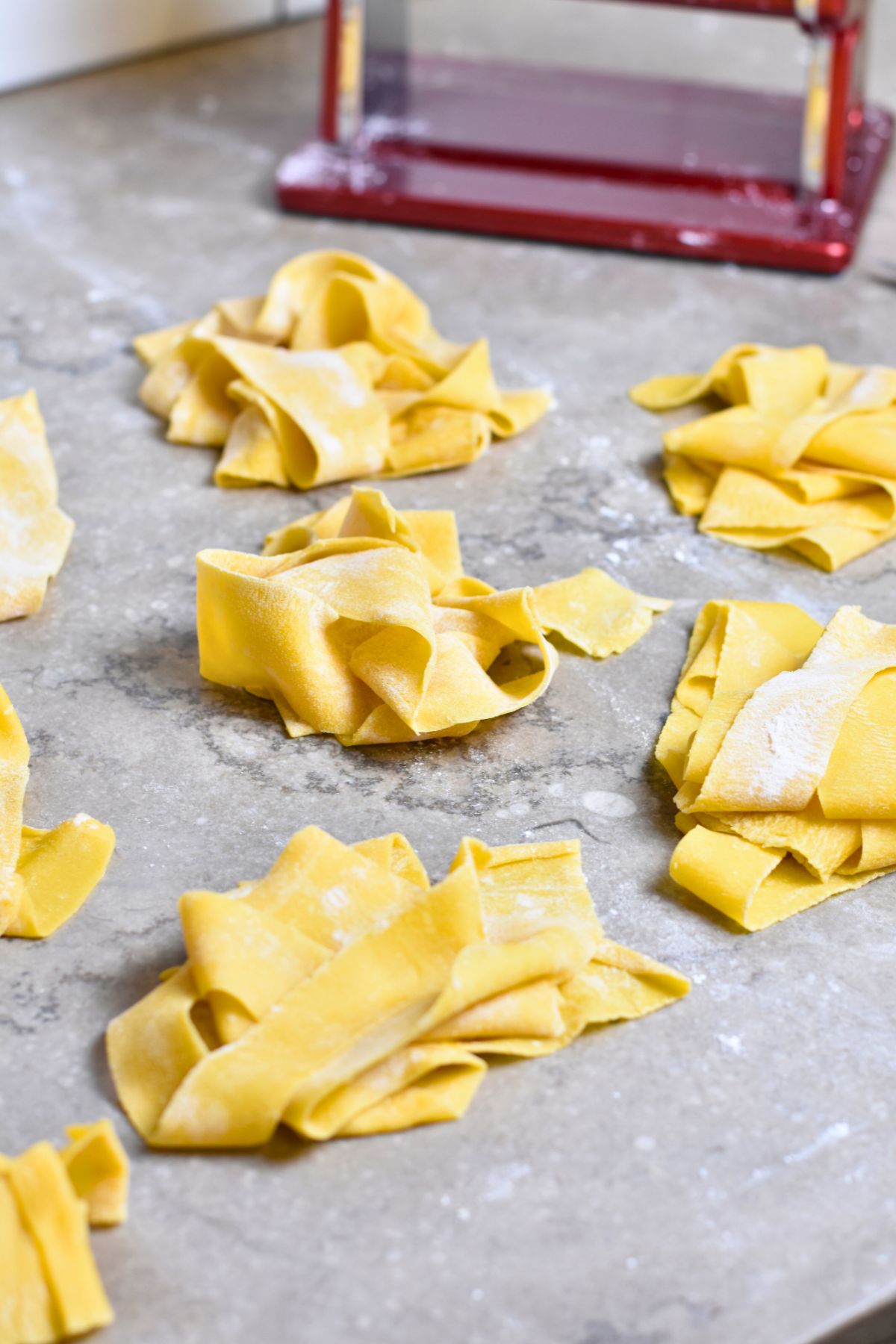
Homemade Pappardelle Pasta is a wide ribbon noodle made from scratch with a simple egg pasta dough. Perfect in a hearty sauce.


Chuckie HessongChuckieEdit Profile
Homemade Pappardelle Pasta
A few years ago I traveled to Lucca, Italy, to study and cook at the International Academy of Italian Cuisine.
For two weeks, I ate some of the best food of my life - made with care from the best ingredients.
One of the standout meals was Homemade Pappardelle Pasta tossed in a hearty red sauce. Wide, tender ribbons of fresh egg pasta that held onto every bit of flavor in every sauce it was paired with.
When I came home, recreating the homemade pappardelle pasta became my obsession. I've tested and tweaked until I landed on this simple, egg pasta dough.
One that comes together easily by hand or in a stand mixer with a dough hook. I roll it into sheets with my hand-crank pasta machine and cut it into those signature wide ribbons.
I usually cook the noodles fresh. They are ready in just minutes, but these noodles dry beautifully too, if you want to make them ahead.
Pair the noodles with my Red Sauce and Classic Italian Meatballs with Cheese and you've got a homemade pasta dinner that feels like a trip to Italy without leaving your kitchen.
Ingredients for Homemade Pappardelle Pasta
- All purpose flour
- Large eggs - use farm raised, free range eggs if you have access to them. They are richer in flavor and color than store eggs.
See recipe card for quantities.

Step-by-Step Homemade Pappardelle Pasta
If you've ever wondered how to make homemade pappardelle at home without fancy equipment, it's surprisingly simple.
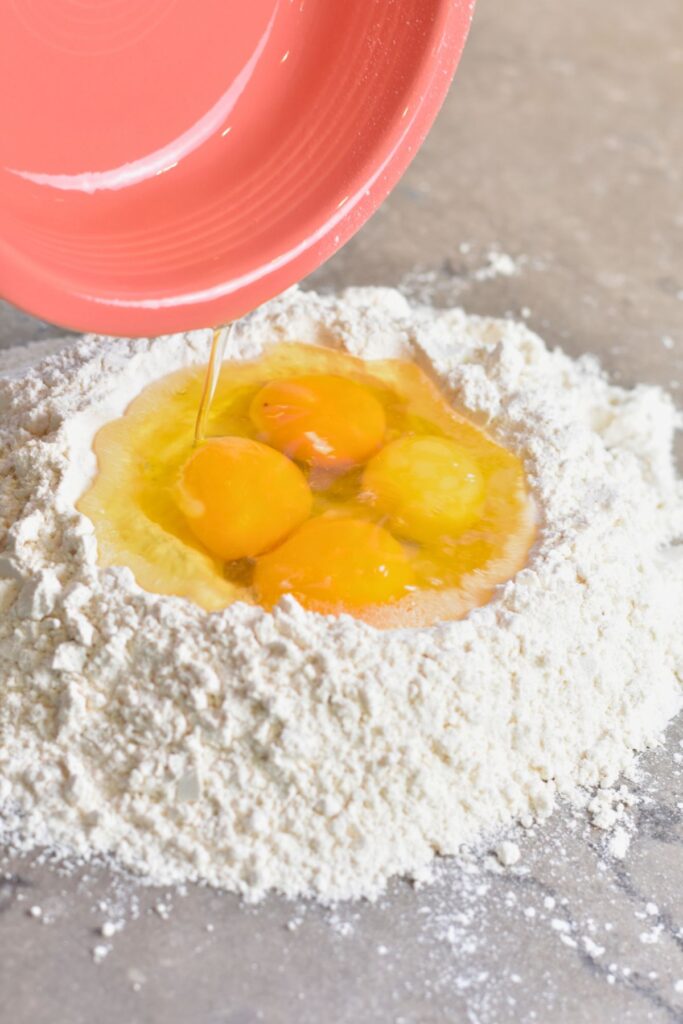
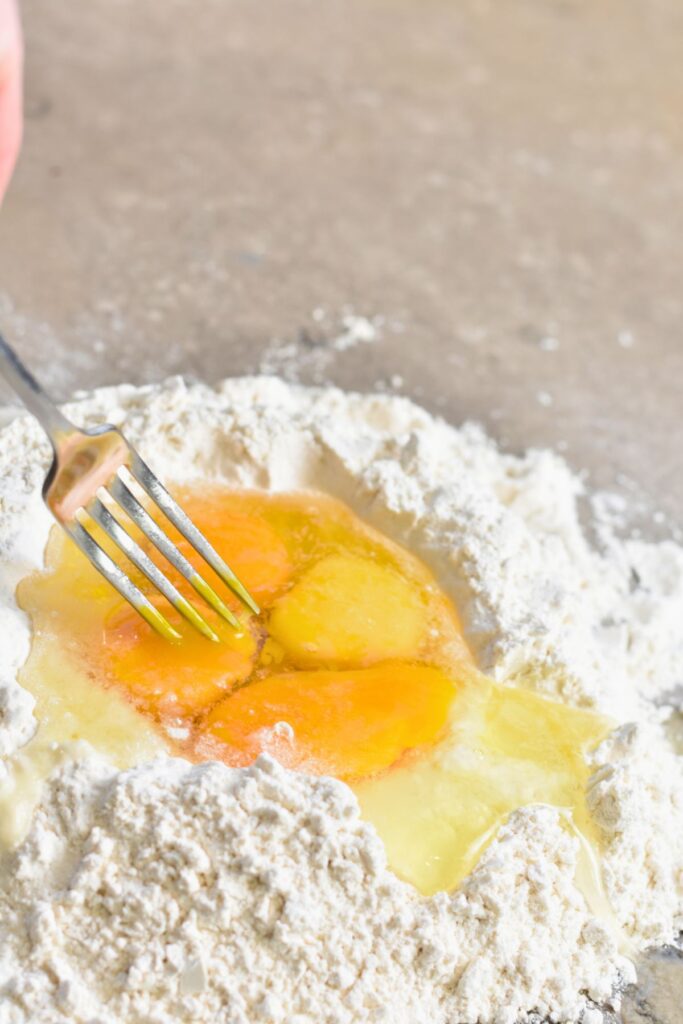
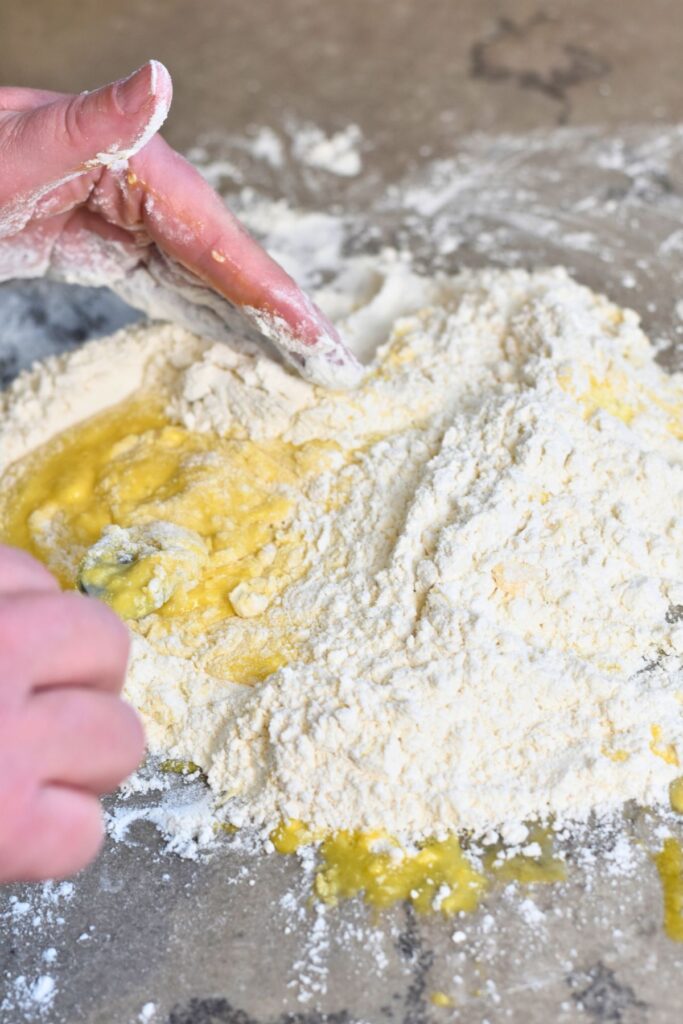
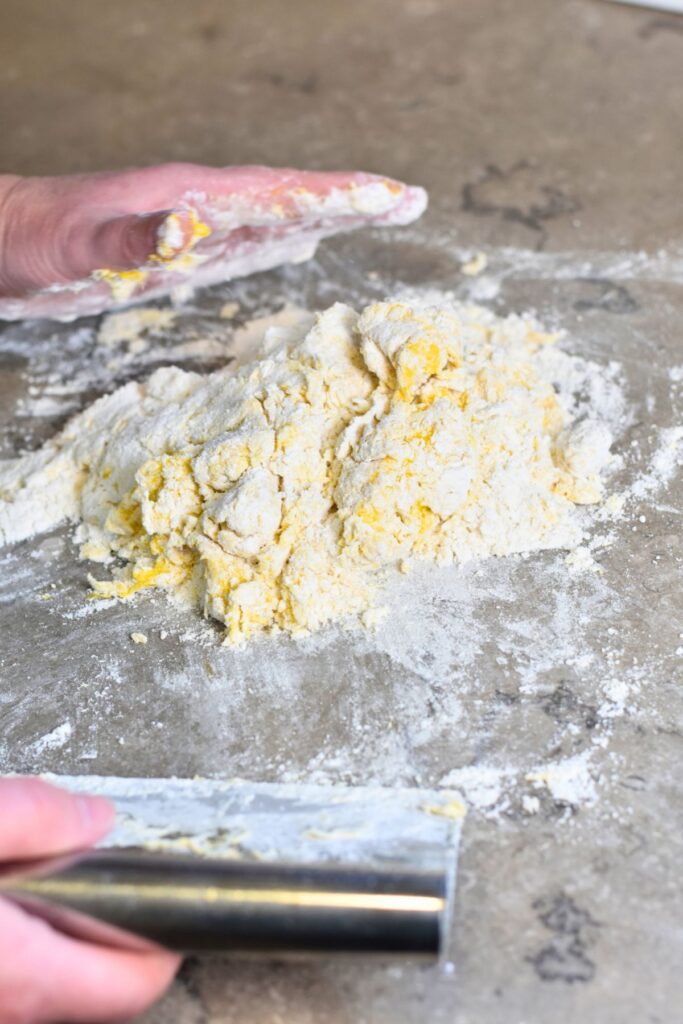
Make the Dough: Create a mound of flour and form a well in the center. Add the eggs and gradually bring the flour into the eggs until a shaggy dough forms. Note: you can use a stand mixer with a dough attachment to make and knead the dough.
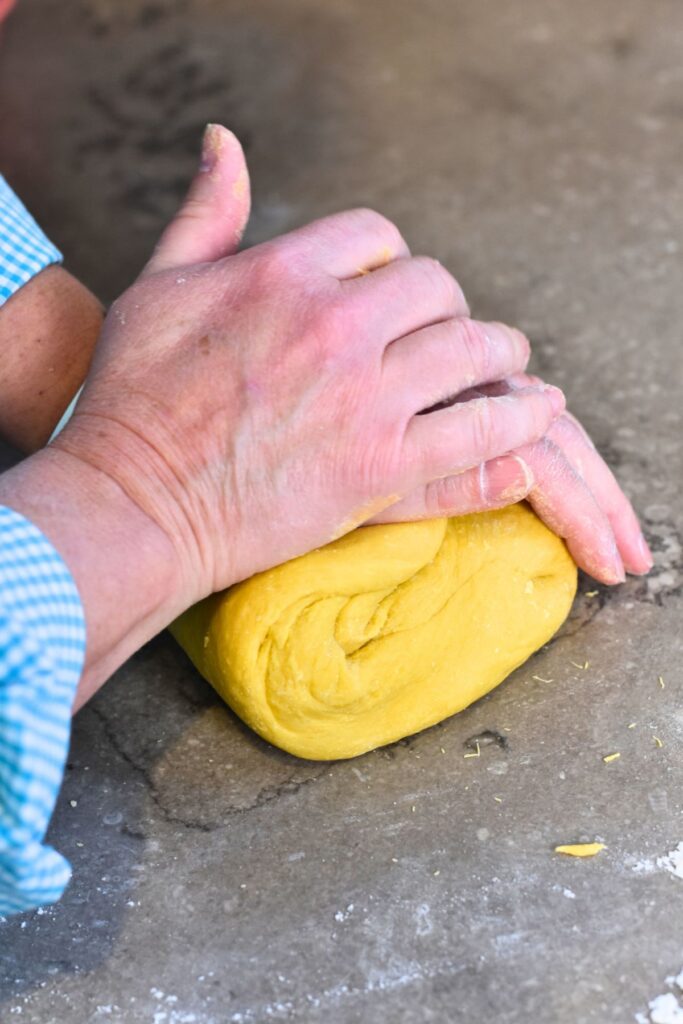
Knead Until Smooth: Knead the dough until it becomes smooth and silky - 8 to 10 minutes. This develops the gluten and give the pasta structure.
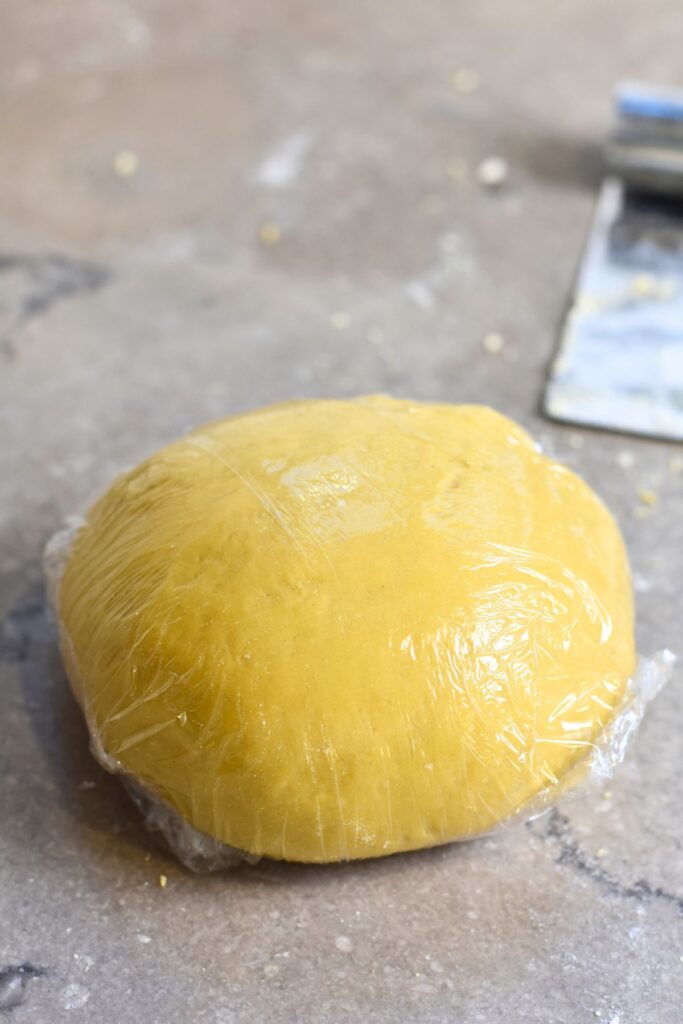
Rest the Dough: Wrap and let the dough rest for 30 minutes. This gives the gluten a chance to relax and makes rolling much easier.
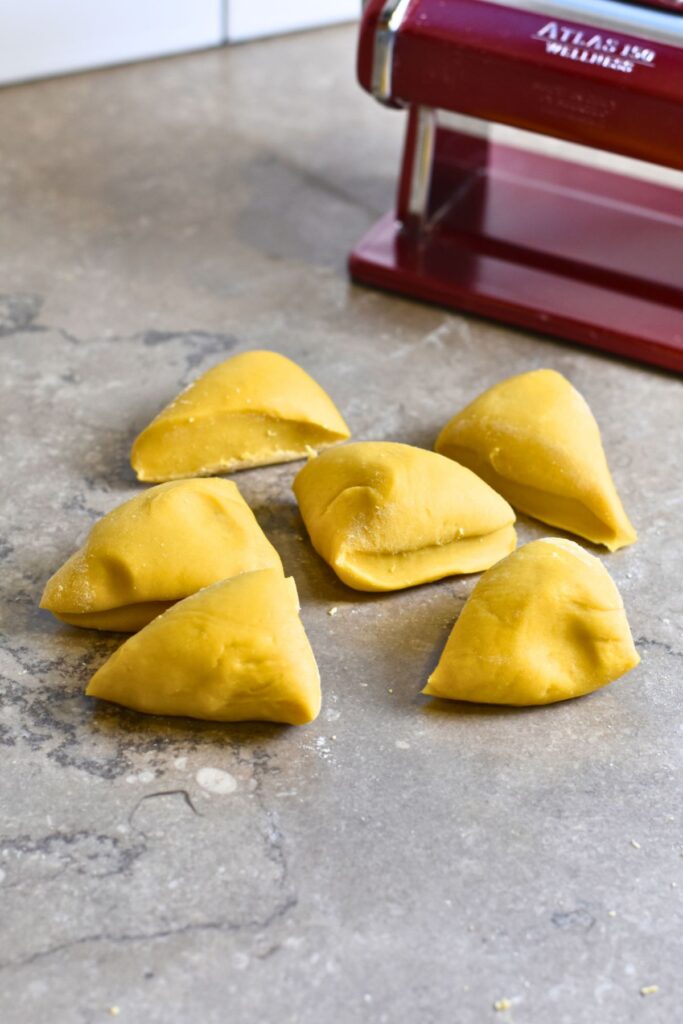
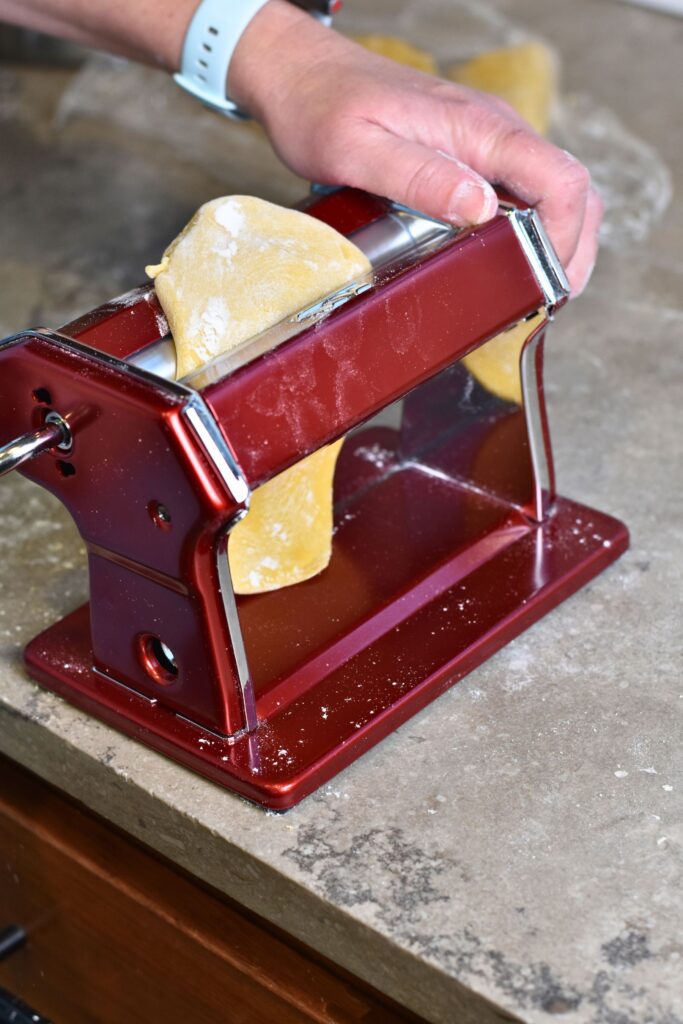
Roll into Sheets: Divide the dough into portions and roll it through the pasta machine. Start at the widest setting and gradually work it thinner until the desired thickness is achieved.
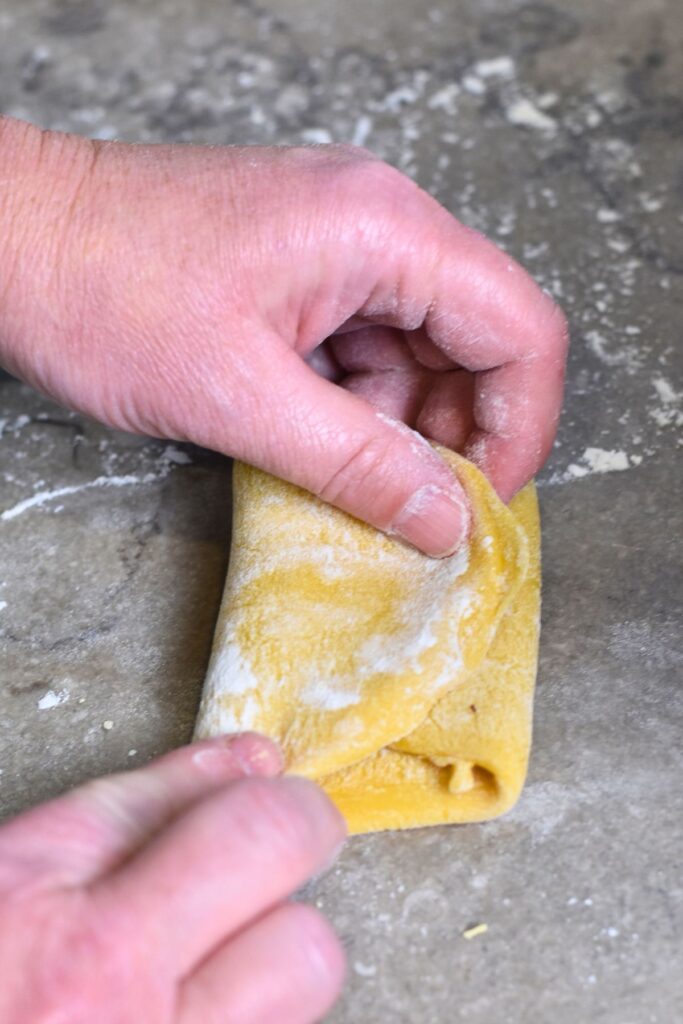

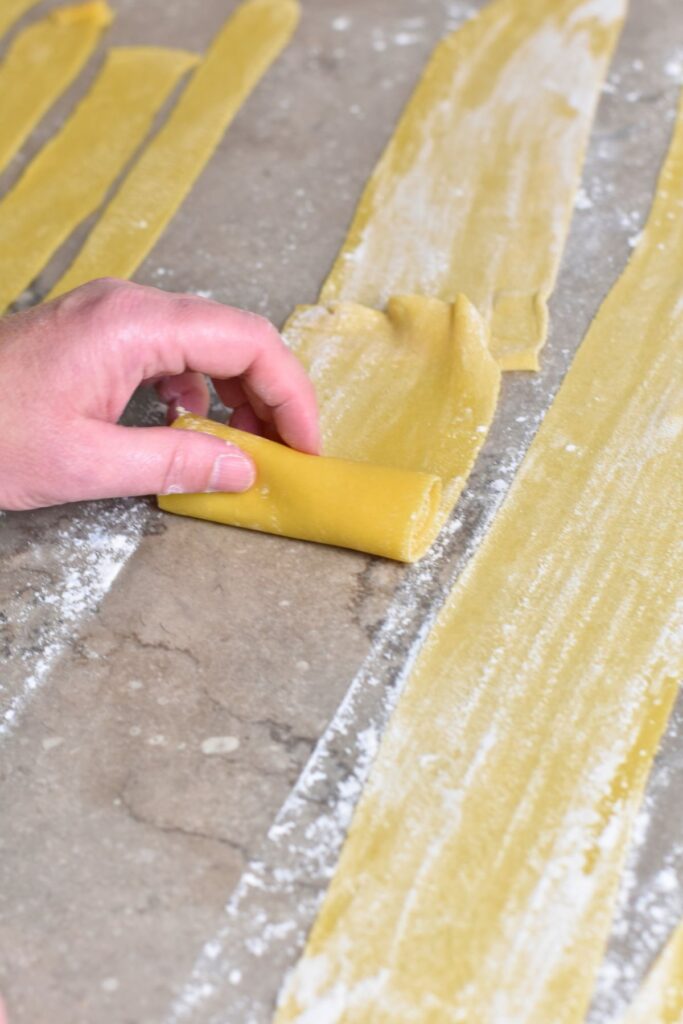
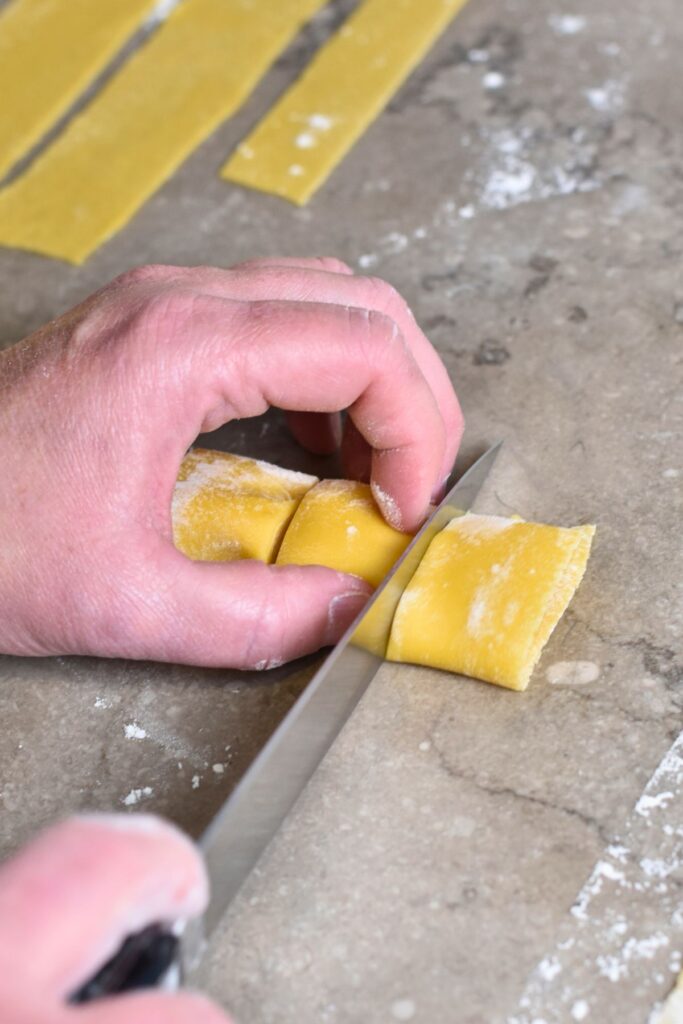
Cut the Wide Ribbons: Roll each section and cut the sheets into classic wide papparedelle ribbons. Lightly flour and let them rest briefly before cooking.
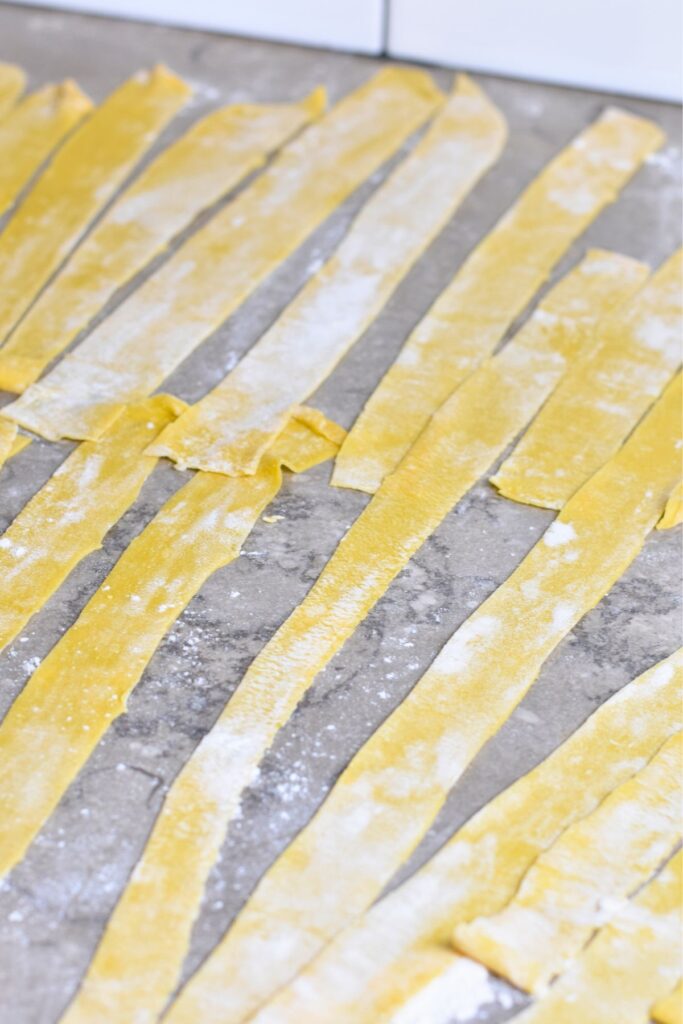
Cook: Fresh pasta cooks in just minutes in well-salted boiling water. Remove pasta from cooking water and add to the sauce to absorb all the flavors.
Hint: Save the pasta water to thin your sauce if it becomes to thick.
Tips for Perfect Homemade Pappardelle
Don't rush the rest. Letting the egg pasta dough rest for at least 30 minutes makes rolling it easier and gives the smooth, tender texture fresh pasta is known for.
Fresh pasta should feel soft, not sticky. If the dough sticks to your hands, dust lightly with flour. If it feels dry or cracks when rolling, knead it briefly to bring it back together and work quickly.
Roll gradually. Start wide and work thinner in stages. This keeps the sheet even, prevents tearing, and creates the perfect homemade pasta texture.
Cook in well salted water. Pasta water should be salty like the ocean. Fresh pasta cooks fast -- like one to two minutes kind of fast. Pull it as soon as it is al dente.
Toss directly in the sauce. Wide pappardelle ribbons are made for a ragu, hearty mushroom sauce, or a rich red sauce. Let the noodles finish in the sauce so they soak up every bit of flavor.
You can dry it, too. If you're not cooking the pasta immediately, let them dry in loose nests. Then store them in an air tight container until ready to use.
Storing Homemade Pappardelle Pasta
Fresh pasta can be stored in the refrigerator for 24 hours if lightly floured and covered. For longer storage, dry them completely.
Freezing Homemade Pasta - Arrange the pasta in loose nests on a baking sheet and freeze until firm. Transfer to a freezer safe container. Freeze them for 2 to 3 months - cook straight from frozen. Just add an extra minute at cooking time.
Top Tip
Don't drain your pasta in a colander. Instead use tongs to remove it from the cooking water and transfer it to the sauce. This allows the pasta to soak up the sauce.
FAQ
Yes. You can roll the dough by hand using a rolling pin until thin, then cut into wide ribbons. It takes a little more work, but the result is just as delicious.
Knead in a small amount of flour. You should be able to push your finger into your noodle dough and not feel sticky.
Recipes
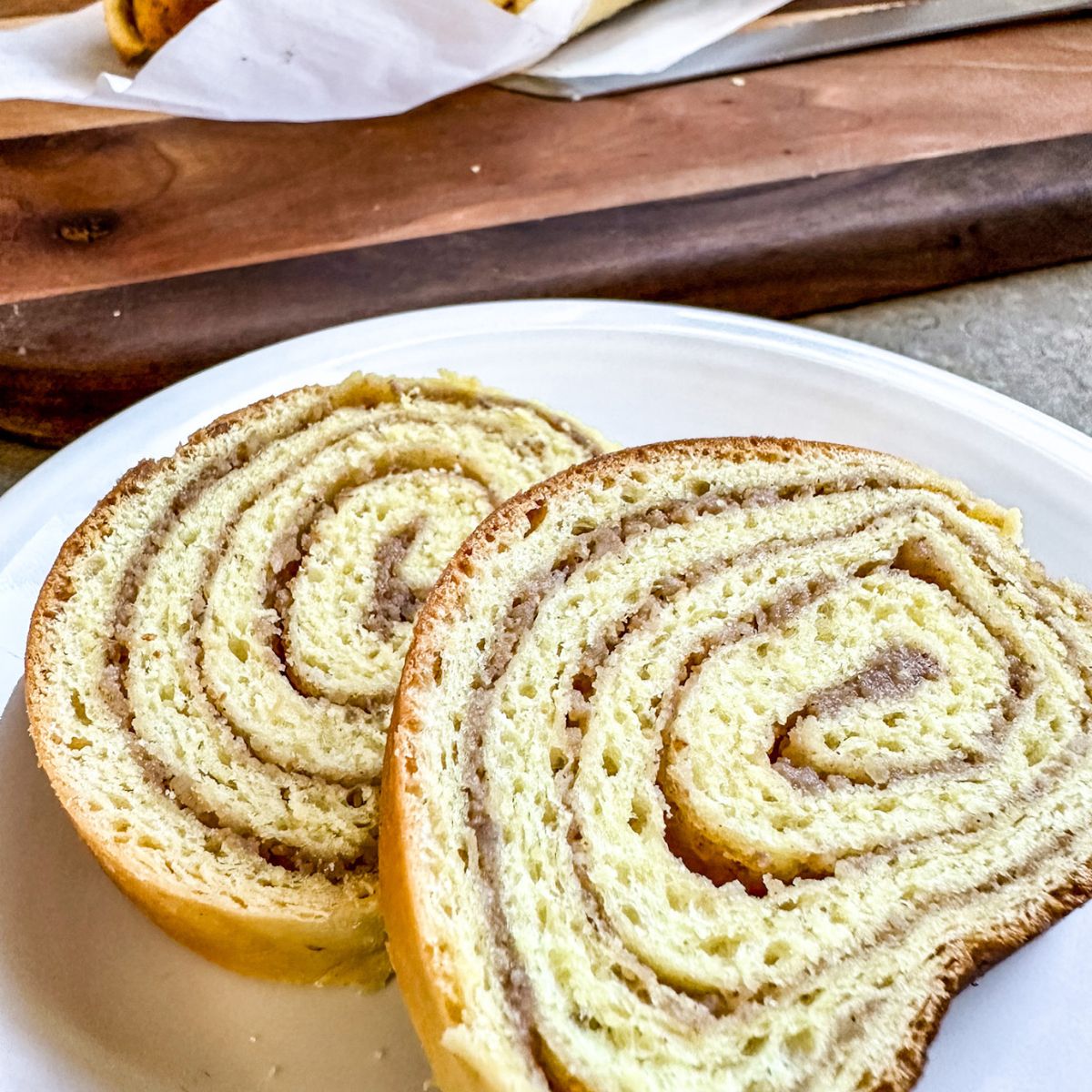
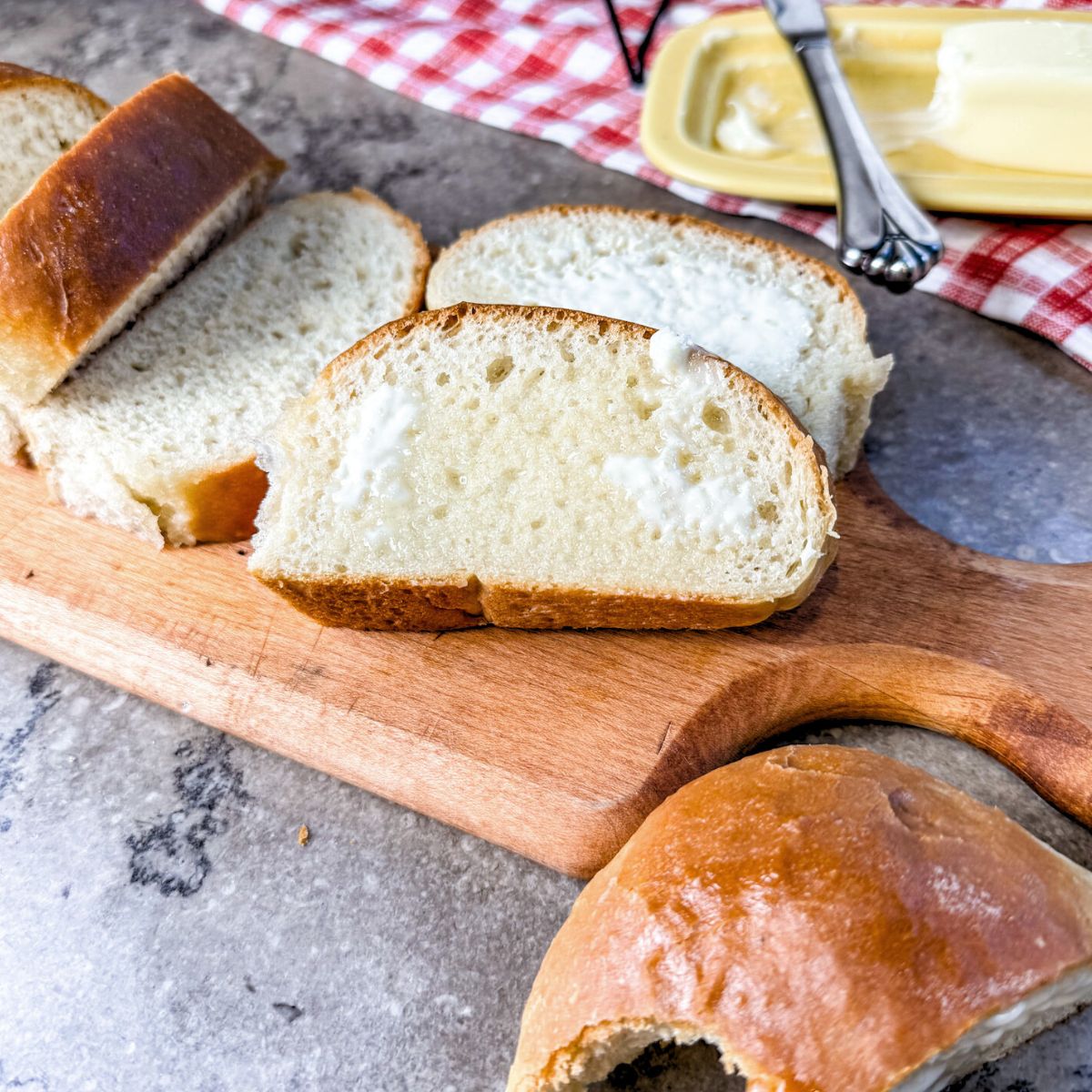
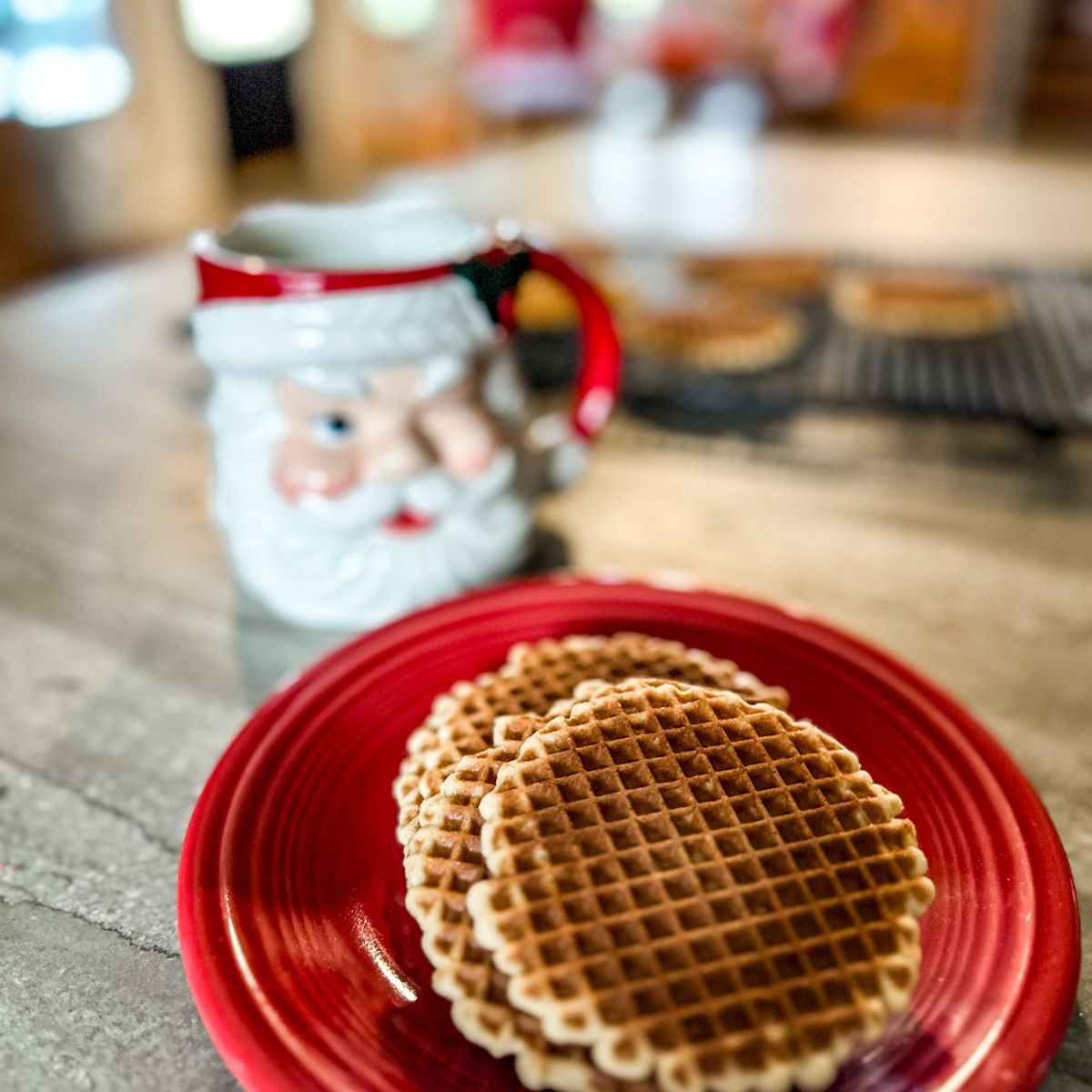
Looking for other recipes inspired by my trip to Italy to try?

New Recipes
Looking for a new recipes? Try these:


Share the Love
Leave a comment and I'll do my best to answer you!
And, if you made this recipe, please let me know how you liked it by leaving a comment and/or giving a rating!
And of course, if you do make this recipe, tag @laughingroostereats on Instagram and hashtag it #laughingroostereats! Seeing your photos is our favorite thing!
Homemade Pappardelle Pasta
Ingredients
Method
- Put the flour out on your work surface and shape it into a mound. Scoop out a deep hole in the center of the mound and crack your eggs into it.2 cups all purpose flour, 4 large eggs
- Beat the eggs lightly with a fork, very gently bringing in more flour as you beat them.
- Once the eggs are no longer runny, start working in flour with your hands until you have a well combined dough.
- Keep adding more flour if it still feels too moist. HINT: A good way to tell is if you press your thumb into the center of the dough and if it comes out clean, no more flour is needed.
- Clear off your work surface and knead the dough for 8 minutes. To knead - Push forward against it using the heel of your palm, keeping your fingers bent. Fold the mass in half, give it a half turn, press hard against it with the heel of your palm again, and repeat the operation. Make sure you keep turning the ball of dough always in the same direction.
- When the dough is smooth and silky, wrap it in plastic wrap and let rest for at least 30 minutes or up to 2 hours. This step is also very important since the gluten must rest so that the dough can be stretched.
- Unwrap, dust your hands with flour (don't add more flour to the dough although it will seem moist), and knead for one minute more.
- Cut the pasta into 6 pieces, flatten each. Cover each loosely with plastic wrap on a board (don't refrigerate).
- Open the pasta machine to the widest plain setting and lightly flour. Run dough through, fold into thirds and pass through again. Pass through 2-3 times more. Place the pasta sheet on a towel on the counter or table. Repeat for each of the dough balls keeping them in order.
- Then reduce width, and run through again. Repeat until your desired thickness, usually about setting 3 or less.
- Cut the pasta into strips by hand or using the settings on the other rollers. Lightly flour and run through. Spread the noodles out to dry for about 10 minutes.
- When cooking pasta, bring a large amount of salted water to a rolling boil, and drop in pasta. Stir lightly. Cook only for about 1 minute or until al dente. Fresh pasta such as tagliatelle, linguine, and even wider pappardelle cooks incredibly quickly.
- Stir cooked pasta into sauce and allow it to soak up the sauce. Serve hot.
Nutrition
Notes
- Pasta cooking water should be as salty as the ocean before adding the noodles to cook.
- Save pasta water to thin the pasta sauce, if needed.

This tender homemade pasta is a totally different experience from store bought. Worth the effort!
LOVE THIS RECIPE! Used to always buy noodles from the store, but not anymore! Thanks for sharing!!
Glad you enjoyed it. 🙂