
Potato Flake Sourdough Bread
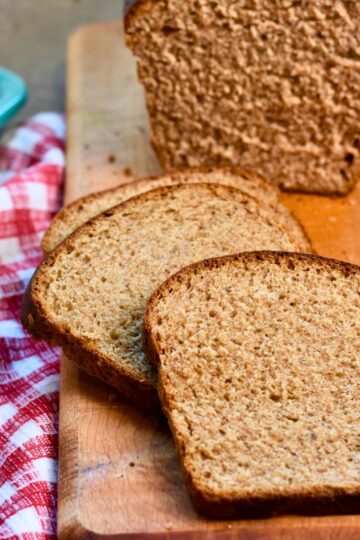
Potato Flake Sourdough Bread is a no-fail recipe that creates soft, pillowy loaves of bread, cloud-like rolls, and sweet cinnamon rolls. PLUS: a starter that is easy to start on your own and easy to keep going. If you've tried and failed at making sourdough bread, this recipe is for you.
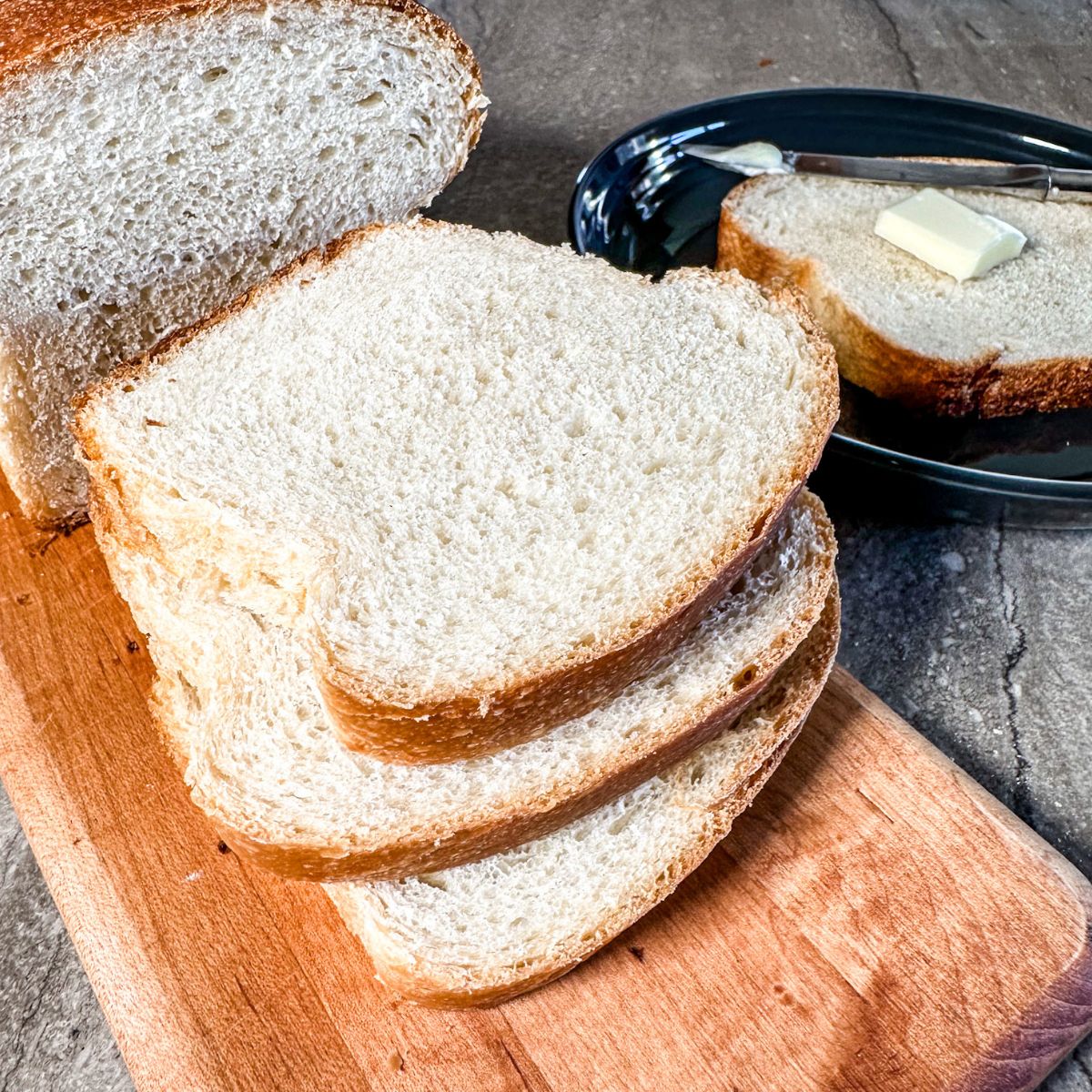
Old Fashioned Potato Sourdough Bread
My family and friends were using the Potato Flake Sourdough Bread recipe to make homemade sourdough bread long before sourdough became a trendy phenomenon.
Our trusty Potato Flake Sourdough Bread recipe has been passed down through generations, consistently delivering loaves that are wonderfully soft and irresistible.
Here I'll share:
- How to create your own potato flake sourdough bread starter
- How to feed your starter
- Yeast basics
- How to make the dough
- Baking bread
- Testing bread for doneness using a thermometer
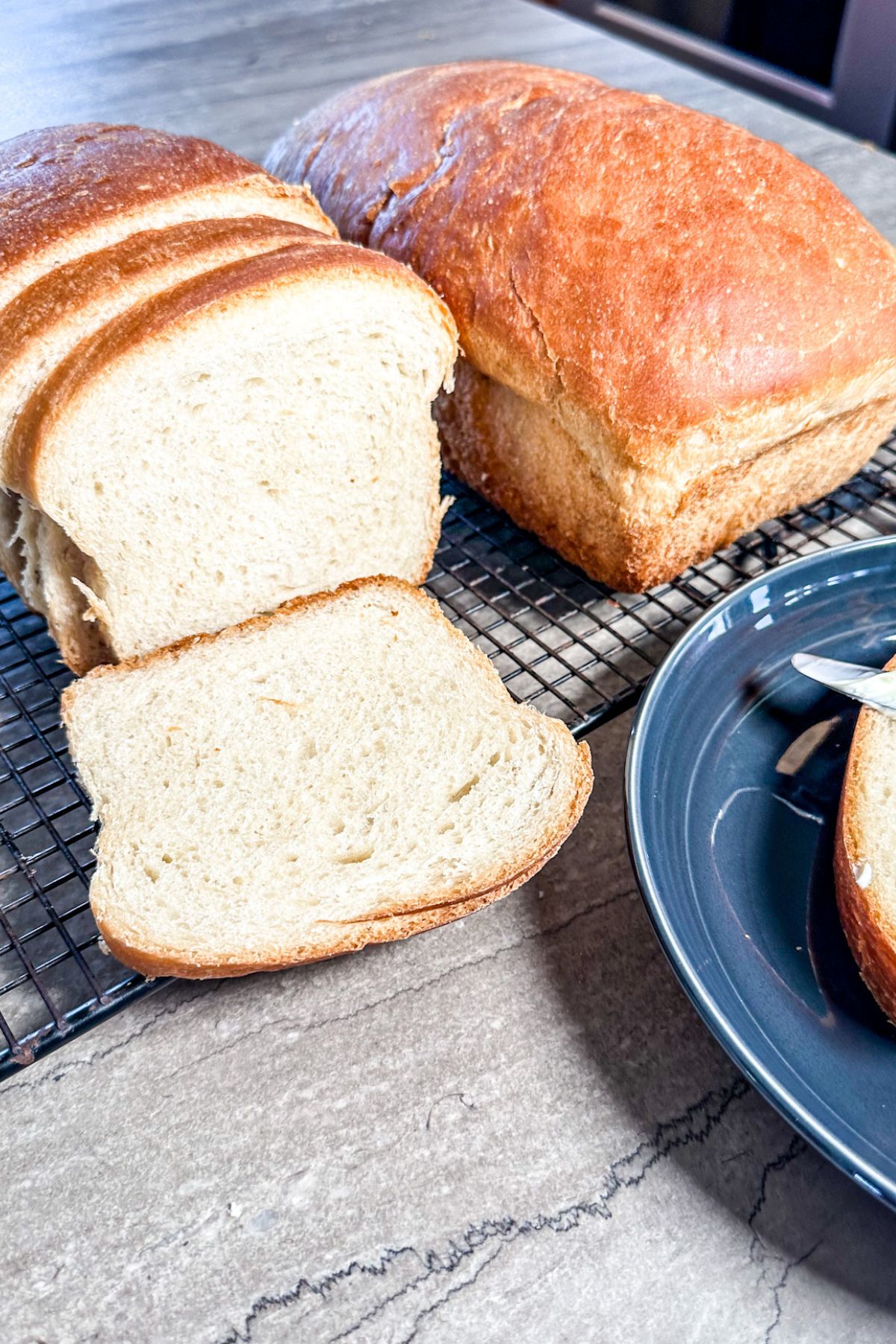
More Breads to Try
I love yeast breads, quick breads, and sour dough breads. Here are a variety of my bread recipes for you to consider trying.
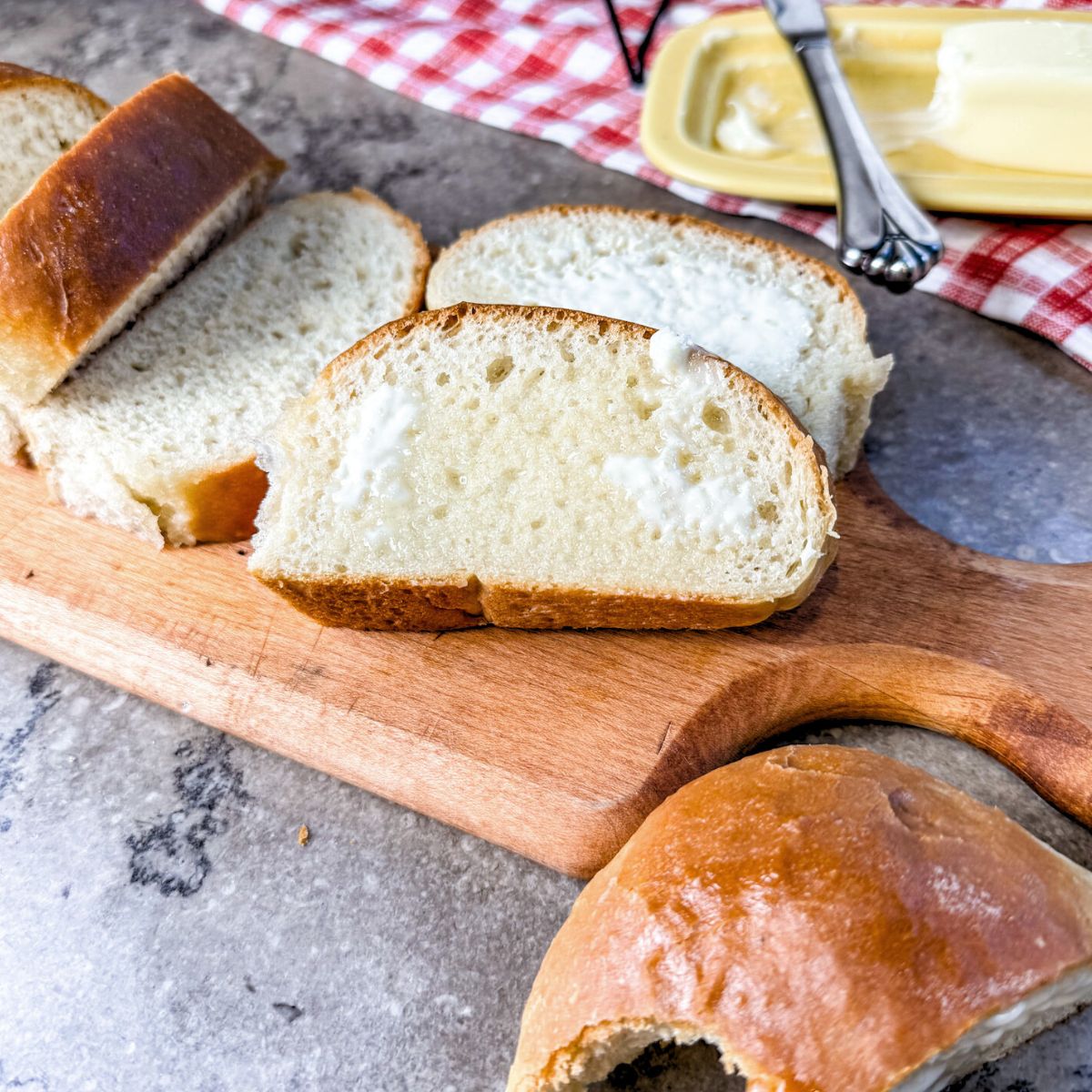
Ingredients for Potato Flake Sourdough Bread
I'll provide ingredients and instructions for the starter and the dough separately. The starter only has to be made the first time, if you feed it weekly. After that, store the starter in the fridge until next week when you're ready for another round.
How to Create a Potato Flake Sourdough Starter
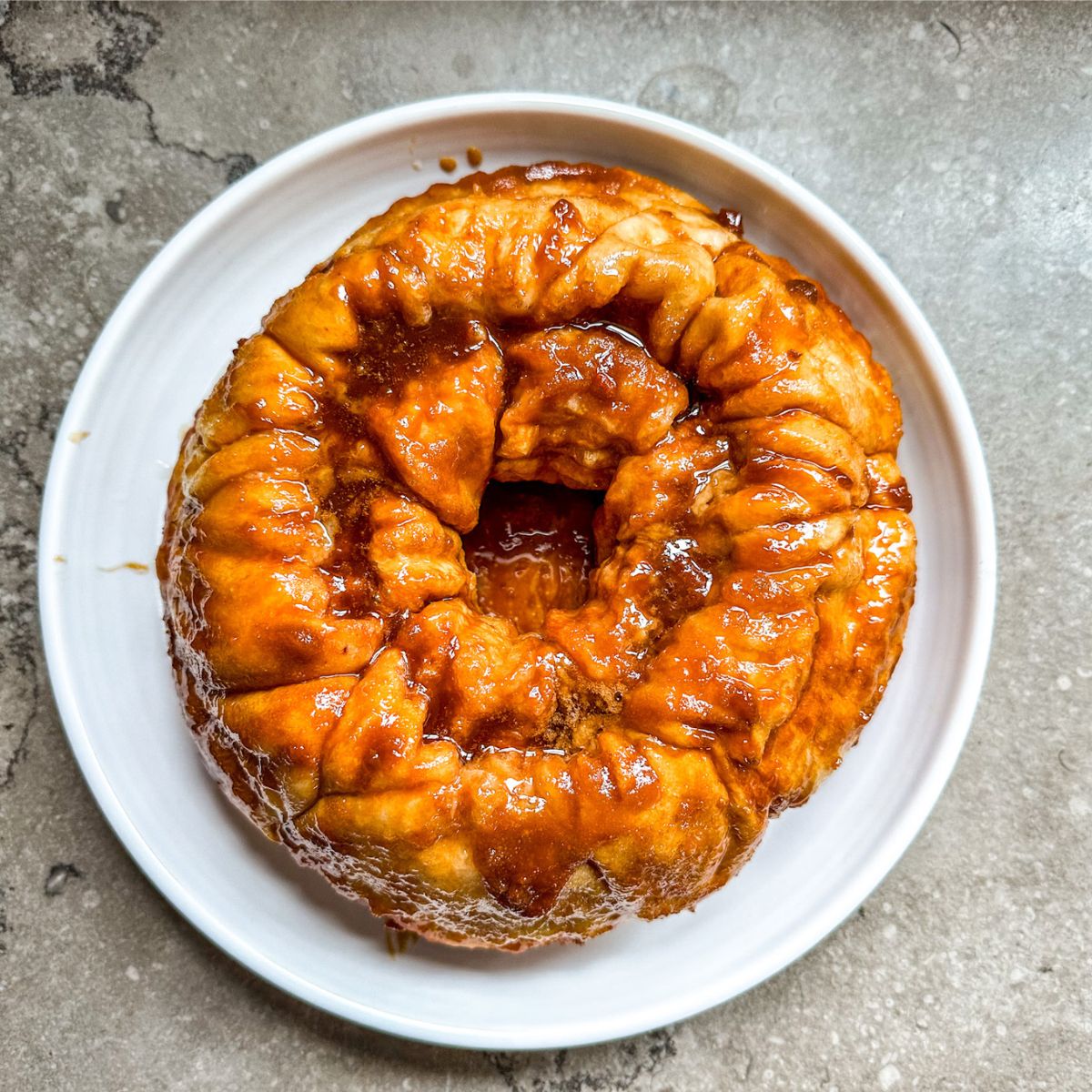
It's easy to create your own starter with this recipe. The dough yields a wonderfully flexible dough with a slightly sweet taste that can be turned into pillowy loaves for sandwiches, cloud-like rolls for dinner, and sweet cinnamon rolls for breakfast.
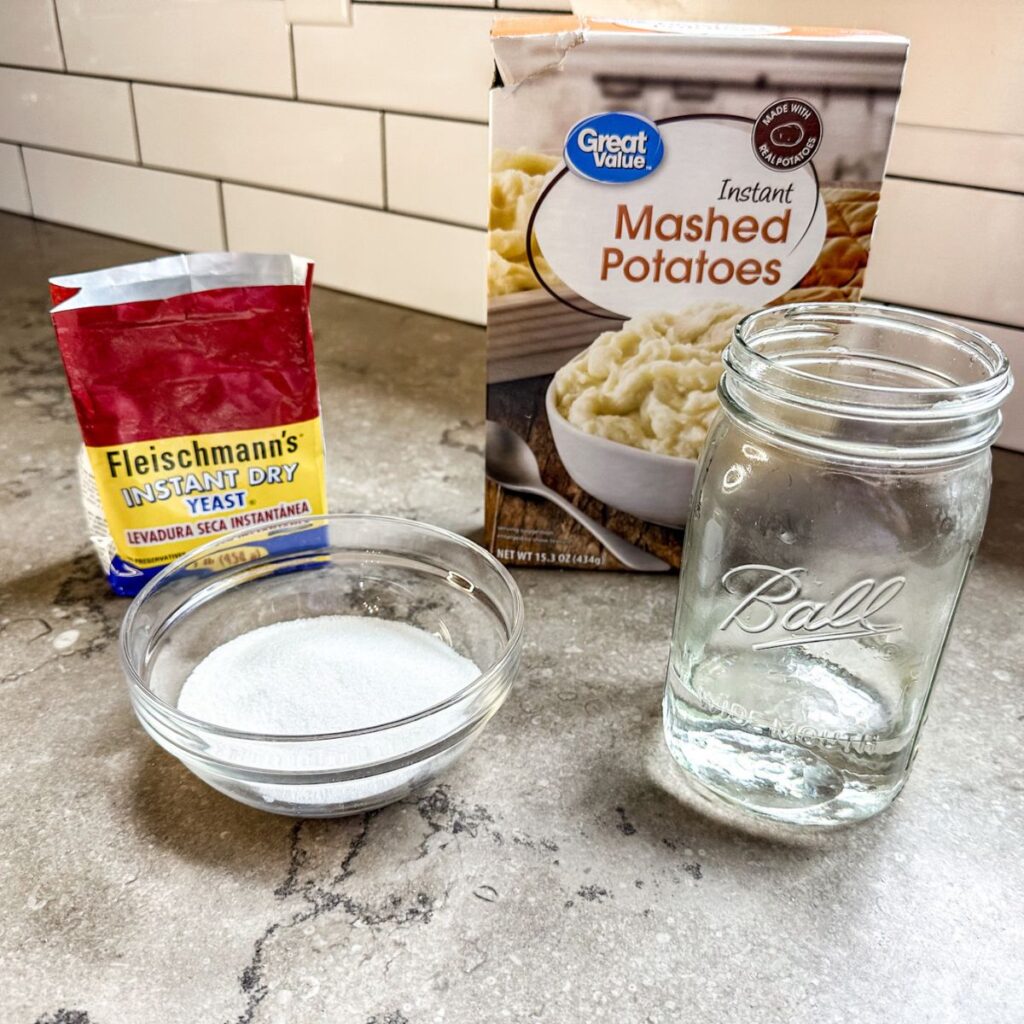
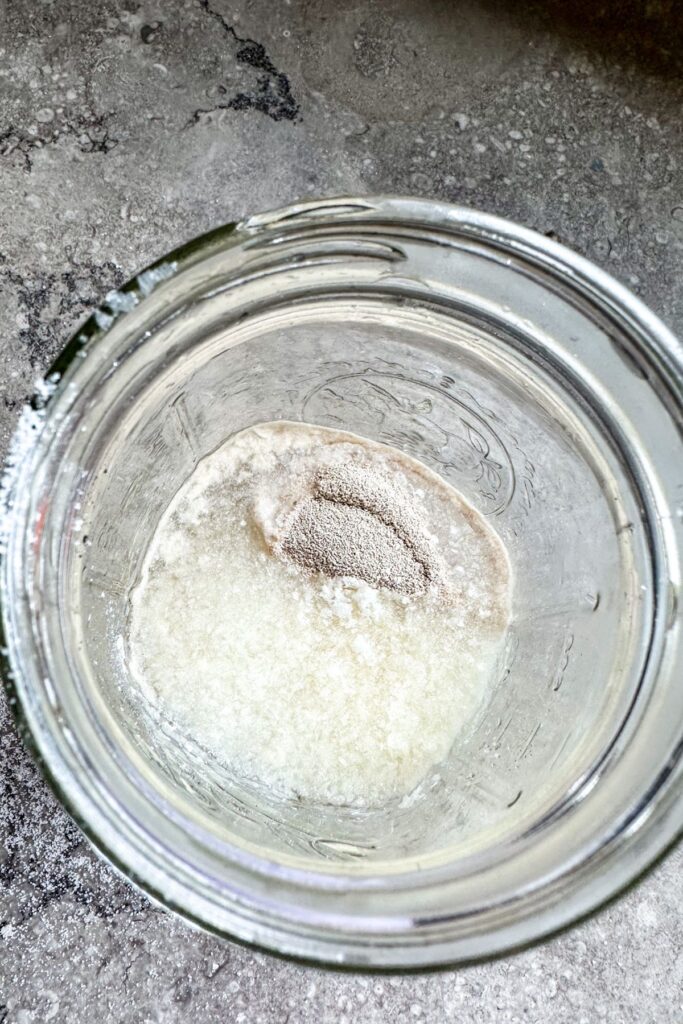
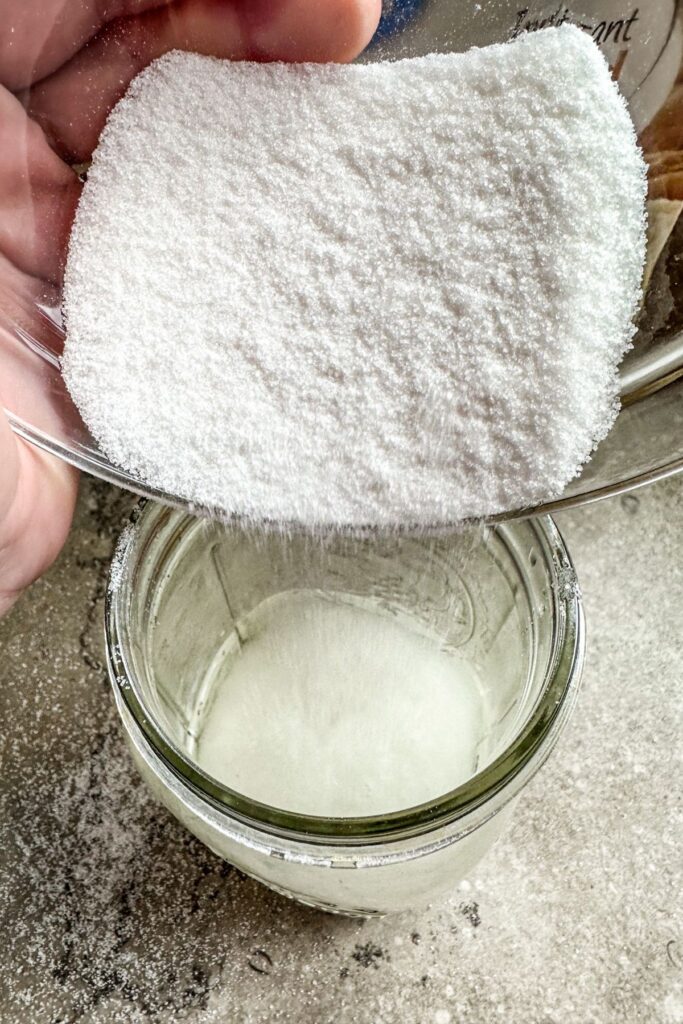
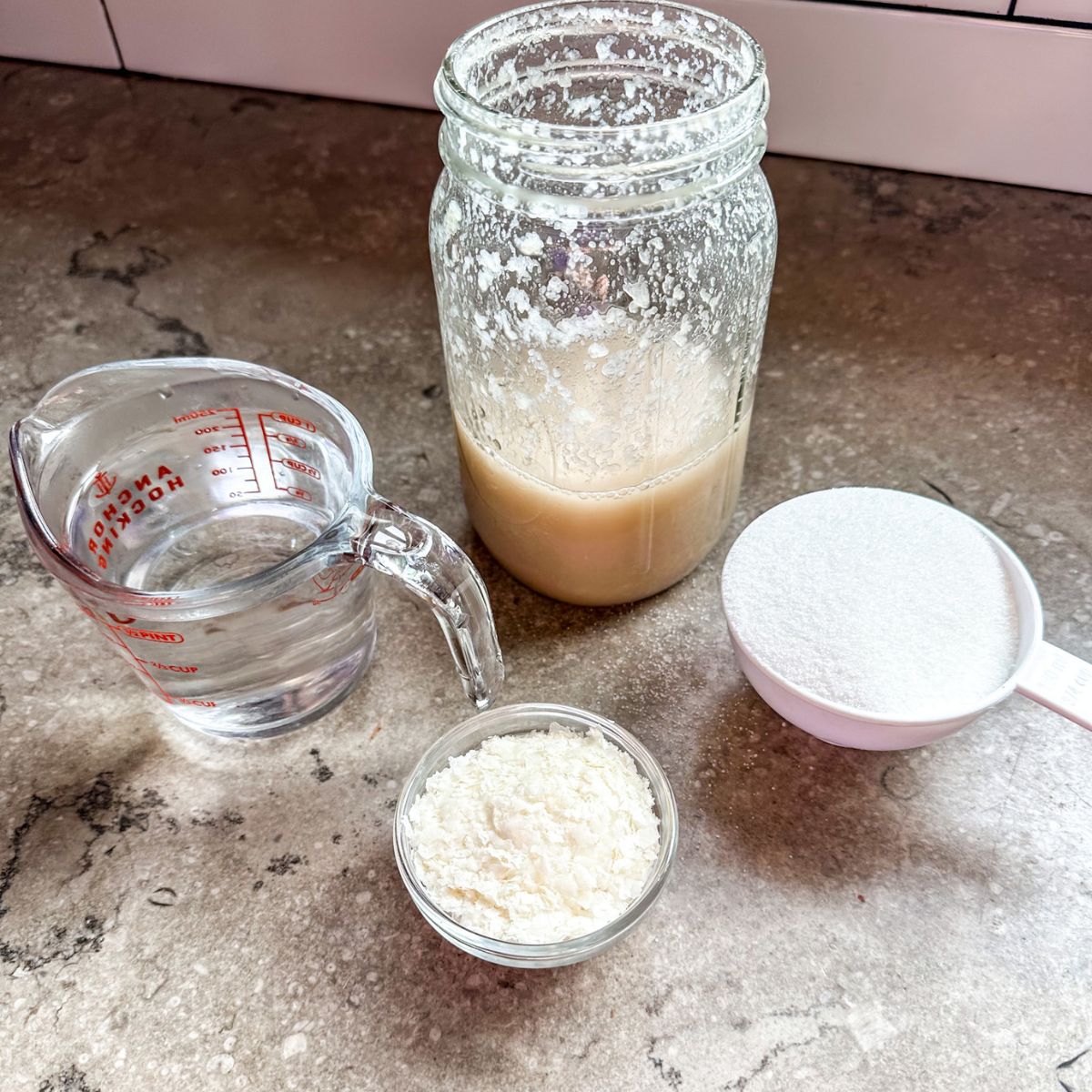
The first time you make this bread you must create your starter. In a quart glass jar or similar size container add:
- 1 cup of hot water - 120° to 130°F tap water. This is hotter than other yeasts can tolerate. For a temperature reference, most home's water heaters are set around 120. (see below for more information on proper temperatures for yeast)
- 1 package of instant active dry yeast -This helps the starter to get active faster. Wild yeast in your environment will also contribute to the starter.
- ¾ cup sugar - Food for your yeast to grow and develop flavor.
- 4 Tablespoons instant potato flakes - Serves as a food source for the yeast.
- Place lid on tightly and shake until well stirred.
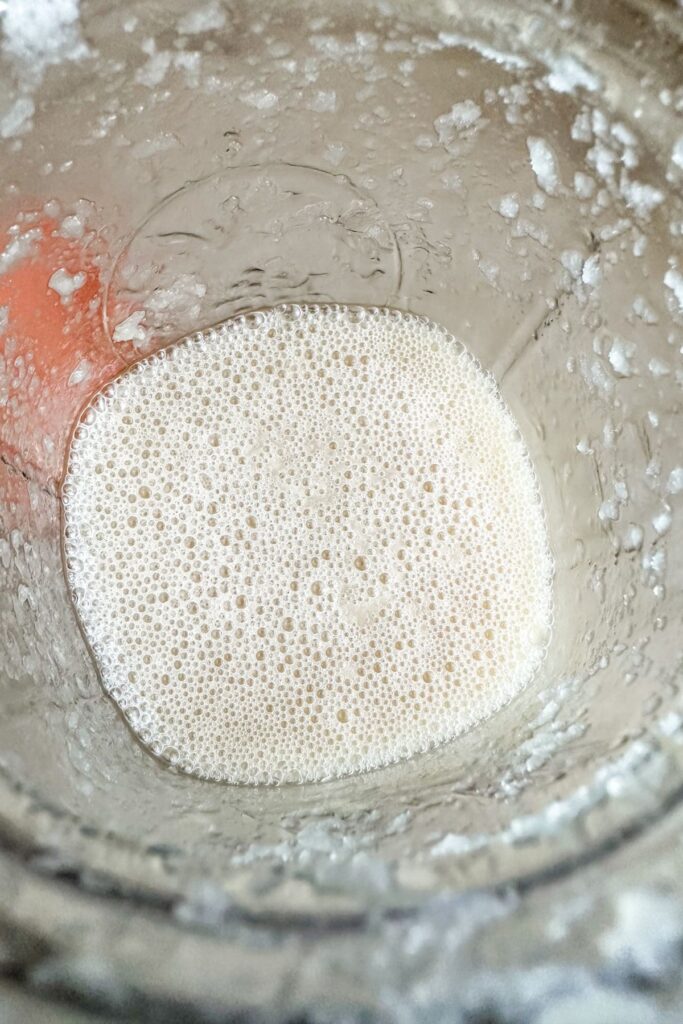
- Loosen the lid and let stand in a warm place for 24 hours.
- Put the starter in the refrigerator for 3 more days.
How to Feed the Potato Flake Sourdough Starter - Day 4 and then weekly
On the fourth day feed your starter by adding:
- 1 cup warm water (100 degrees F is ideal)
- ¾ cup sugar
- 3 Tablespoons instant potato flakes
Stir and set at room temperature for 24 hours. Then use 1 cup of the starter to make bread dough and store the remaining starter in the refrigerator. Make weekly or more often to keep the starter active.
Note: See the recipe card at the bottom of the page for measurements and full instructions.
What temperature does yeast need to activate?
The answer to this question is, it depends on the yeast you are using.
Instant Yeast or Rapid Rise Yeast - I use Instant Yeast when making my yeast bread. It requires a higher temperature to activate. So water should be 120-130 degrees when making your starter. To feed the established starter, I find that 100 degrees F is ideal.
Rapid Rise Active Dry Yeast - This yeast prefers a slightly lower temperature for activation. Shoot for 100-110 degrees F to activate and 100 degrees F to feed the established starter.
How to Test Water Temperatures for Yeast without a Thermometer
Knowing that most home water heaters are set to 120 degrees F helps me to have a starting point for using the wrist test to identify ideal temperatures for yeast water.
Dribble a bit of the water on the inside of your wrist. If it feels comfortably warm to you it's around 100-110 degrees. If it feels hot it is likely closer to 120-130 degrees.
I recommend purchasing a digital stem thermometer. It is an inexpensive kitchen tool and one that is needed in consistent bread-making for testing the water and the internal temperature of the dough.
How to make Potato Flake Sourdough Bread Dough
This dough is flexible and can be used for all kinds of yeast breads. This sourdough recipe can be mixed by hand or with a stand mixer fitted with a dough hook.
The day after you feed the starter:
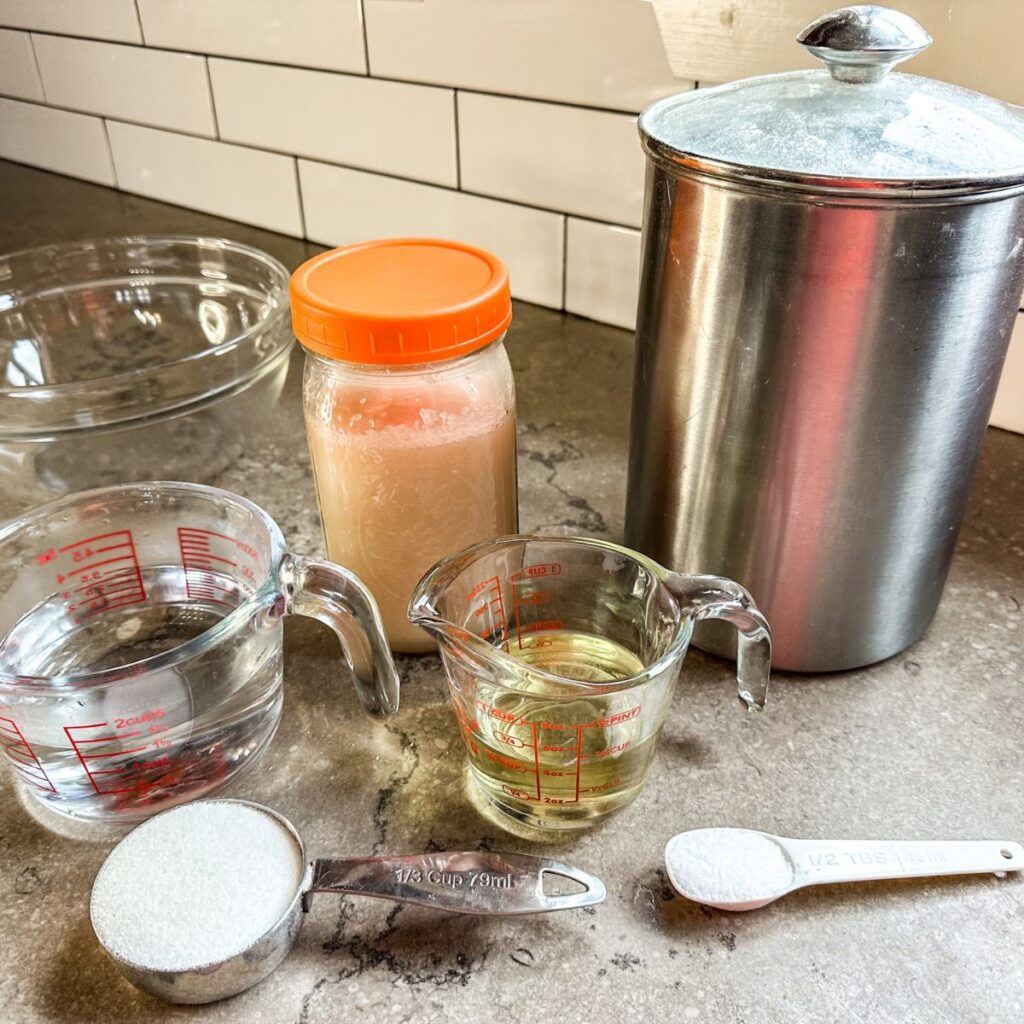
- In a large bowl, mix warm water, 1 cup of starter, sugar, salt, and oil.
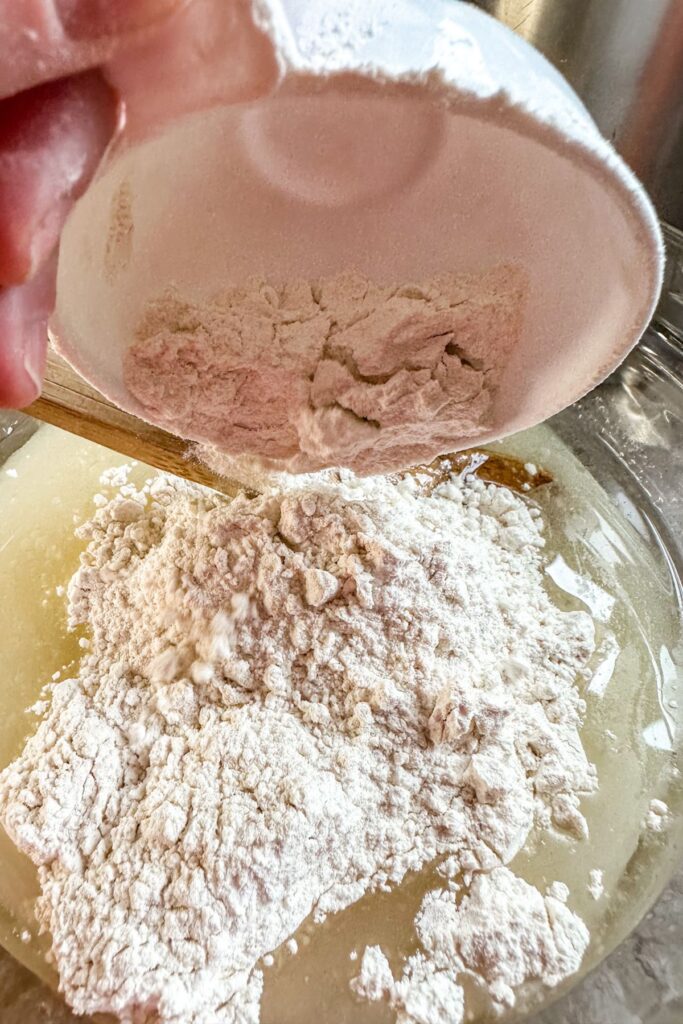
- Stir in all-purpose flour, 1 cup at a time.
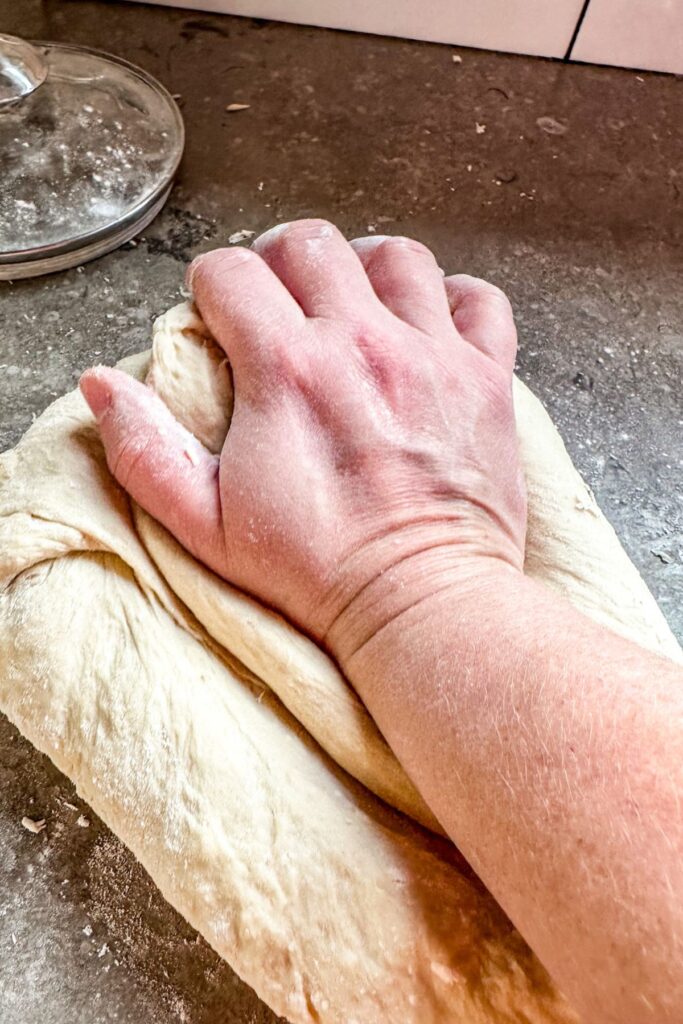
- Knead the dough on a lightly floured surface sprinkling lightly with flour until no longer sticky.
- Pour 1 Tablespoon of oil into the bottom of a large mixing bowl. Place the finished dough ball in the bowl and turn it over. This will coat the outside of the dough and prevent it from drying out.
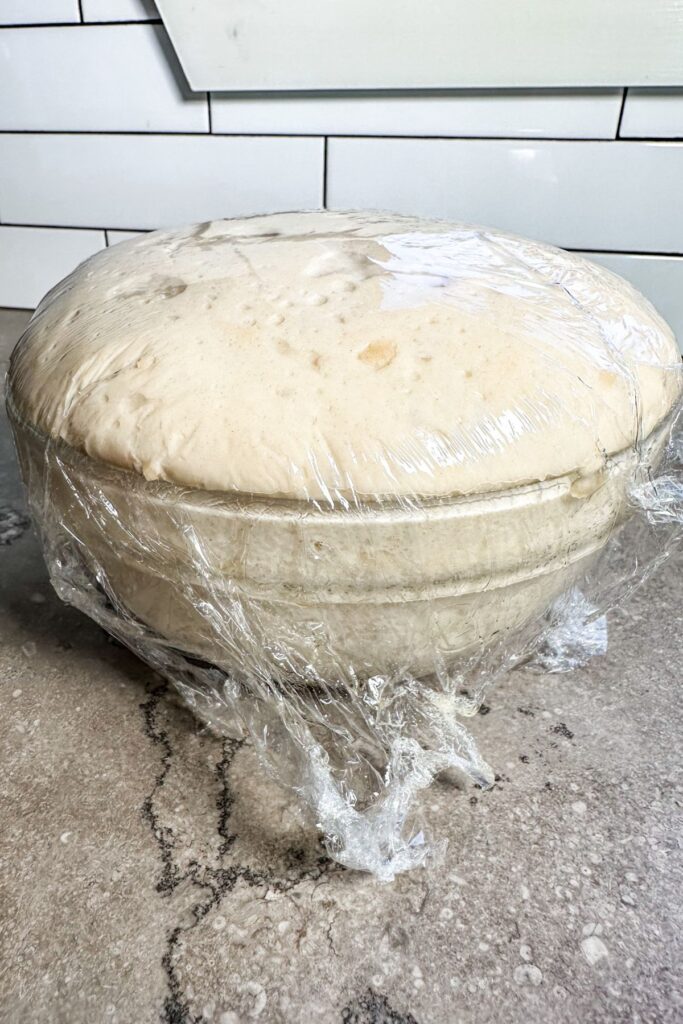
- Cover bowl with plastic wrap and let rise 8-12 hours or overnight at room temperature.
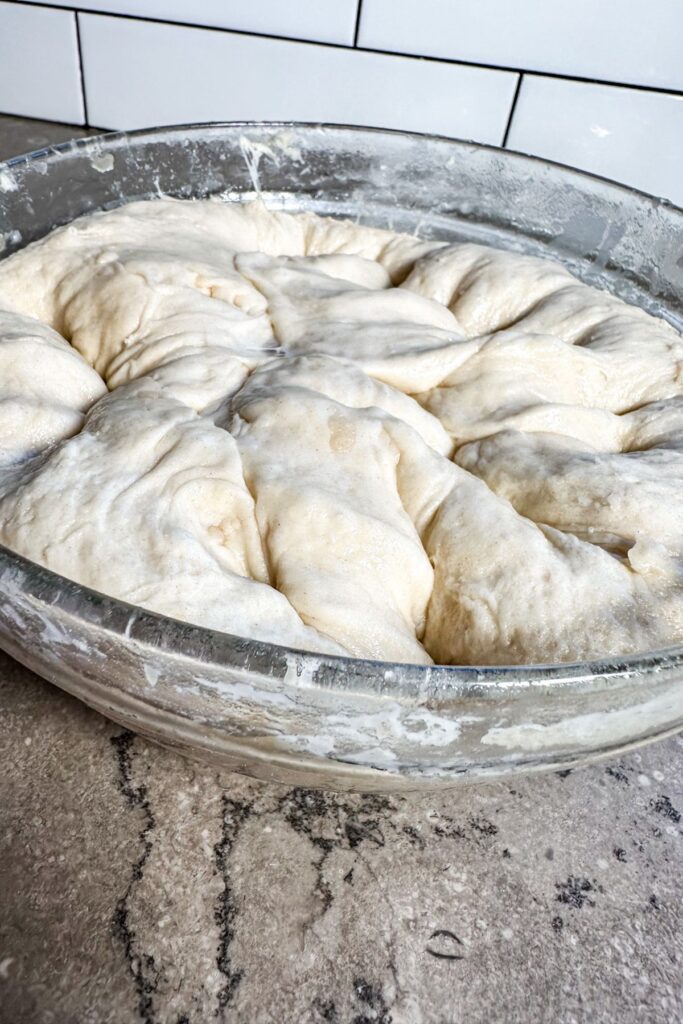
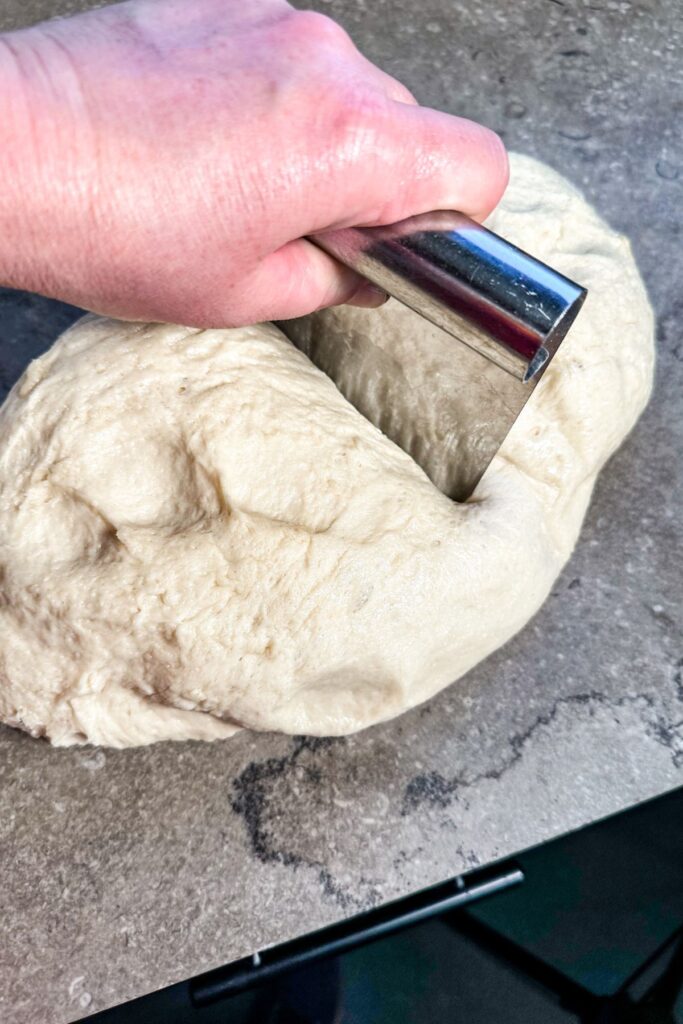
- Punch down the dough on a lightly floured surface.
- Divide dough into 2 or 3 loaves.
- Put into greased loaf pans.
- Brush the tops of the loaves with olive oil or vegetable oil and cover with plastic wrap.
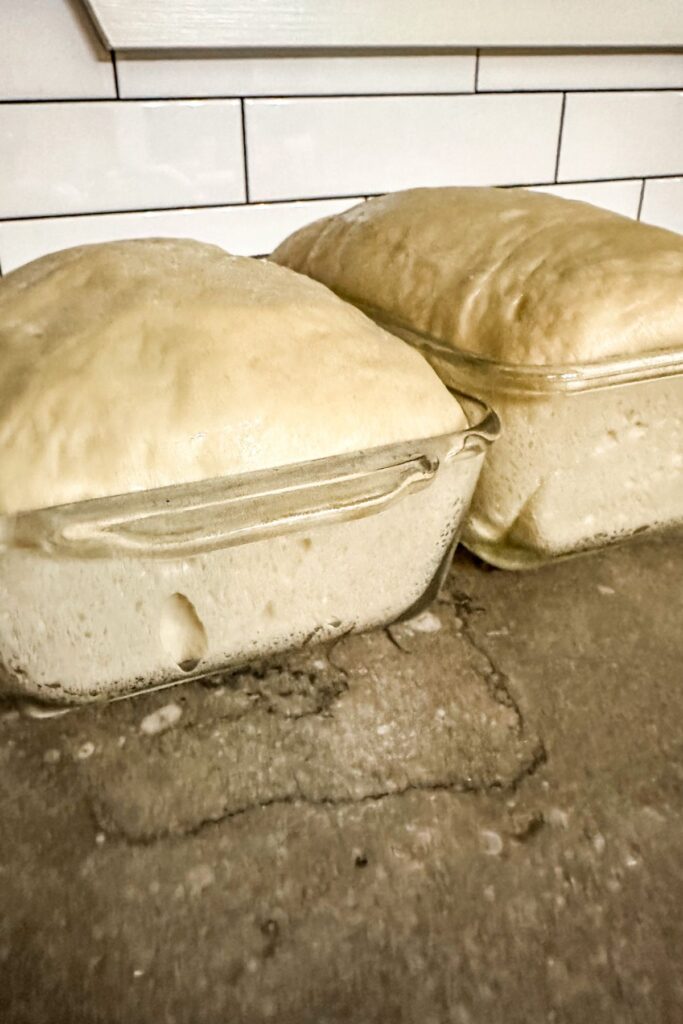
- Allow the bread to rise at room temperature for 3-5 hours or until doubled.
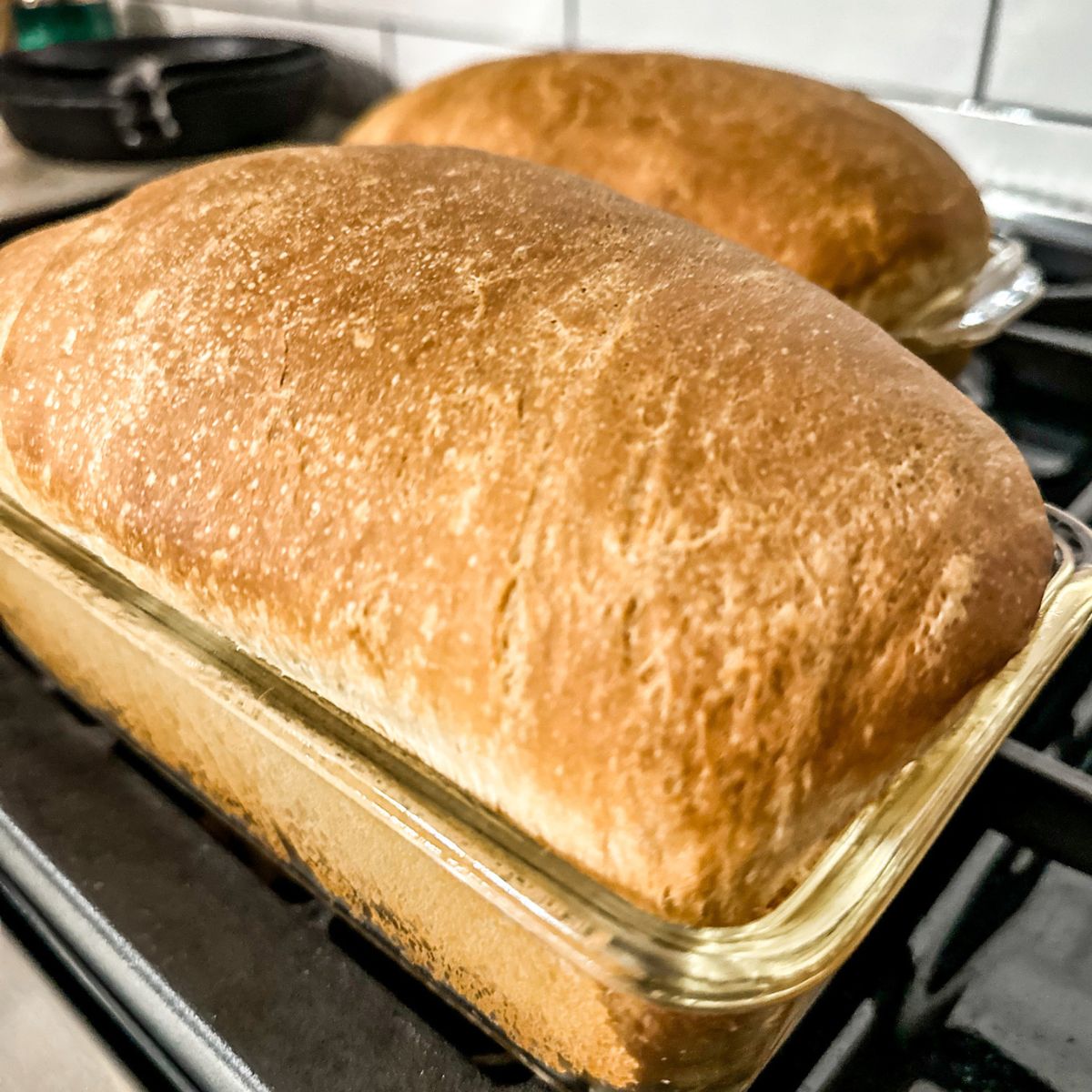
- Bake at 350 degrees F for 30-40 minutes or until golden brown and 190 degrees internally.
- Brush tops with butter. Remove from pans to cool completely.
Note: See the recipe card at the bottom of the page for measurements and full instructions.
Internal Temperature of Bread Loaves
I've baked bread for over 30 years and didn't start testing the internal bread temperature until the last few years.
You don't have to temp the bread, but sometimes the bread may appear done when it isn't fully baked on the inside. Golden brown on the outside doesn't always mean its fully baked.
My theory, bread is too delicious to waste because I didn't temp it.
So get an inexpensive digital probe thermometer and poke it into the side of the baking bread to measure the center temperature of the bread.
For sandwich bread, I aim for 190 degrees F. I find that this ensures the middle is fully cooked, it's golden brown on the outside, but still moist and tender. And stays this way longer.
When cooked to 200+ degrees F, I find the bread crust to be a bit thicker and the insides to be slightly dryer. Not what I want out of my homemade bread.
Internal Temperature of Rolls
Not to make this seem too complicated. Because it isn't complicated. But when baking rolls I encourage you to consider how you plan to serve them.
To serve your buns hot from the oven: Bake rolls until very light brown. They will be perfect when served hot. This means they dry out a bit when stored.
To serve your buns at room temperature: bake them until they are only pale gold, with an internal temperature of 190 F.
FAQ
Yes, this is a type of fermented bread dough starter. However, because this recipe uses sugar and potato starch to feed the starter, the dough behaves differently and yields a soft, pillowy dough.
This bread is a sweeter bread with a tender crust and does not have the same texture as traditional sourdough bread.
Alcohol is a byproduct of the fermentation process that happens when good bacteria feed on the starch in the potato flakes and the sugar. So, if your starter has a sweet, slightly alcoholic smell to it, you are doing it right.
Use the temping sections above to help guide you.
To share with your friends and family, feed your starter and pour 1 cup of starter into a jar. Provide instructions to feed the starter the next day and proceed with making bread as directed.
Feed it! Then set it out on the counter for an hour or so at room temperature for 2 hours. When you stir it around does it make bubbles? Then it's active. If not, wait another 2 hours and check again. If you find it isn't active, just start from the beginning and make a new starter.
How do I share a starter for Potato Flake Sourdough Bread?
Shout-out to my momma's long-time friend, Denise, for being the keeper of this recipe. Denise is quick to say it's not her recipe and doesn't take credit even though she's been making it for 25 years.
I love that about her. She's my kind of cook. Recipes aren't owned by anyone and are meant to be shared. Thank you, Denise.
Like Denise, be prepared to make a starter for anyone you share this bread with. They are going to want to make it, too.
To share with your friends and family, feed your starter as directed. Then pour 1 cup of starter into a jar. Provide instructions for your friend to feed the starter the next day. You can proceed with making bread as directed.
Do you have other questions about Potato Flake Sourdough Bread?
Leave them in the comments and we will get back to you! We want to help you to be a successful sourdough maker.
Pairing


Leave Feedback, Please
If you make Potato Flake Sourdough Bread following this recipe, please let me know how you liked it by leaving a comment and/or giving a rating!
We love hearing from you! I'll do my best to respond to each comment.
And of course, if you do make this recipe, tag @laughingroostereats on Instagram and hashtag it #laughingroostereats! Seeing your photos is our favorite thing!
Food Safety
- Wash hands before cooking
- Do not use the same utensils on cooked food, that previously touched raw meat
- Never leave cooking food unattended
Potato Flake Sourdough Bread
Ingredients
Method
- In a quart jar with well-fitting lid, add hot (120° to 130°F) tap water, ¾ cup sugar, 4 Tablespoons of instant potato flakes, and 1 package of instant active dry yeast.1 cup Warm Water, ¾ cup Sugar, 4 Tablespoons Instant Potato Flakes, 1 package Instant Yeast
- Place lid on tightly and shake until well stirred.
- Loosen the lid and let stand in a warm place for 24 hours.
- Put the starter in the refrigerator for 3 days.
- Feed the starter by adding 1 cup warm (110 to 110℉) water, ¾ cup sugar, and 3 Tablespoons potato flakes.1 cup Warm Water, ¾ cup Sugar, 3 Tablespoons Instant Potato Flakes
- Stir and allow to set at room temperature for 24 hours.
- Use 1 cup of fed starter to make bread and store the remainder in the fridge for up to one week before feeding the starter and making dough again.
- The day after you feed the starter--In a large bowl, mix warm (100 to 110℉) water, 1 cup of starter, oil, sugar, and salt.⅓ cup Sugar, ½ cup Oil, 1 ½ teaspoons Salt, 1 ½ cups Warm Water, 1 cup Starter
- By hand or using a stand mixer with a dough hook, stir in all-purpose flour, 1 cup at a time.6+ cups Flour
- Knead the dough for 6 to 8 minutes on a lightly floured surface sprinkling lightly with flour until no longer sticky.
- Pour 1 Tablespoon of oil into the bottom of a large mixing bowl. Place the finished dough ball in the bowl and turn it over. This will coat the outside of the dough and prevent it from drying out.
- Cover bowl with plastic wrap and let rise 8 hours or overnight at room temperature.
- Punch down the dough on a lightly floured surface.
- Divide dough into 2 or 3 loaves. Can make rolls or cinnamon rolls instead.
- Put into greased loaf pans.
- Brush the tops of the loaves with olive oil or vegetable oil and cover with plastic wrap.
- Allow to rise at room temperature for 3-5 hours or until doubled.
- Bake at 350 degrees F for 30-40 minutes or until golden brown and 190 degrees internally.
- Brush tops with butter. Remove from pans to cool completely.
- Feed your starter as directed and make bread. Note: To share with your friends and family, pour 1 cup of starter into a jar. Instruct them to feed the starter the next day and proceed with making bread as directed.


Delish, thank you for sharing
The time invested in getting the starter going was so worth it. Not difficult at al. Just took patience. But I love this bread! I made cinnamon rolls with half and bread with half. Thank you for the recipe.
You didn’t say how much warm water along with the 1 cup of starter for making the dough.
Betty Jean -- Thank you for your comment. I have tried to clarify in the recipe card. Please let me know if you still have questions. 🙂
I've never made sourdough before, although I've got a bit of experience at baking bread(s). Tried this on a whim. Hadn't used a dough hook for years, but followed the recipe closely and used one.
To get water to temperatures listed, I used an 'instant meat thermometer'.
Starter went together easily.
Fed it a week later, but didn't have time to make bread on schedule so I just measured out a cup and kept it in the fridge.
Got starter out and let it get to room temperature, then made dough. It more than doubled in size in 5 hours.
Punched it down and made 3 loaves. Should have made two.
Tip from my breadmaking experiences - I use a rolling pin to make a rectangle, then mist the surface before rolling into loaves - this prevents air bubbles caused by dough not adhering during shaping.
Texture and flavor are great.
Kevin, You made my day! Thank you for your comment and feedback. Great tips! I like your idea of spritzing to make it stick when rolling up.
Curious...
In the starter recipe it says 1 instant yeast pkt. When I purchase it, they are always in groups of 3 joined together... is it 1 pkg of 3 OR 1 of the 3?
I honestly figure it's the whole 3 joined pkt but, hope to get clarification before trying and have a "FAIL"!!
THANKS,
Can't wait to try this!!
;+)
Good question! One of the 3 little packages is an envelope.
My mom’s friend makes this bread and I love it. I created my own starter and it’s definitely active and bubbles when I feed it. However, every time I try to make the bread it doesn’t rise. I can’t figure out what I’m doing wrong. Her recipe is the same as yours, so that’s what I’ve been using…
Easy to follow! 1st time other recipe failed. This one worked !! IM SO EXCITED. THANK YOU
Good job!!!! I hope you enjoy!
I have been making this recipe for 25 years and only recently started baking it in a cold oven. I set the temp at 335 and let it bake for 35-40 min. Internal temp at 190. The loaves get so much taller and a lighter brown and you don't have to wait for the oven to preheat.. Can you see anything wrong with doing it this way? I really like doing it this way.
Al
so, how forgiving is the starter if I forget to feed it for a couple of weeks?
Interesting! I haven't tried starting with a cold oven. If you are having positive results then I say keep at it! I find this starter to be quite forgiving. You may have to feed it a couple of times before using it again if you let it go too long. Thank you for sharing your experience!
If I don't bake bread one week, do I need to discard a cup of the starter?
Great question! Yes, you would discard the amount you would typically use for baking then feed it and go on as usual.
I have used potato flake starter for many years. Recently it stopped "working" even with many attempts to revive it. I used your recipe to make a new starter batch. When I fed it, it did not bubble and seem active but I used it to make my first batch. The bread did not rise as much as I thought it should and did not rise any during the baking process. I can not figure out what is going on!!! I use a thermometer to check the water temperature so I don't think that is it.
So I have a few questions,
In the "write up" describing the how to make starter it says 7 tablespoons of potato flakes. Later on it says 4 and the recipe card says 4. Please clarify.
Also I have always used bread flour as opposed to all purpose flour. Is there a reason you use all purpose flour?
Thanks,
Allison
Allison -- thank you for your message! Let me see if I can help. So the recipe has 7 Tablespoons of potato flakes, DIVIDED. To create the starter, use 4 of the Tablespoons. Then EVERYtime you feed it after that, use 3 Tablespoons. Maybe this is the gap? If not, we will keep working at it until you have beautiful bread!
As for why I use all purpose vs bread flour -- This recipe is old school and that's what the people before me did. Therefore, this recipe has been tested (many times with all purpose). By theory, bread flour should work just fine, but we have always used all-purpose.
I followed the instructions, but my bread turned out heavy and dry. I think the problem may have been the baking time. I tried to bake until the internal temp was 190, but it never made it after 40 minutes. Wasn't even close. So I think I baked it too long. But I am going to feed this week and try again. Hopefully it'll turn out better!
Kim - Bummer, I'm sad that your loaf didn't turn out. That is frustrating. I have emailed you and will help to troubleshoot. From the sound of your message, it sounds more like it didn't rise than it over baked. Make sure you let it fully rise. This is a slow rising bread so patience is required... I'll look forward to helping you be successful!