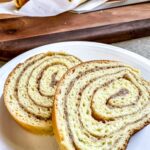
Traditional Potica
Traditional Potica: a bread with rich, nutty flavors, passed down by Yugoslavian immigrants. Potica experts share a century-old recipe.
Servings: 12
Calories: 583kcal
Ingredients
Potica Dough
- 3 ½ cups All Purpose Flour
- ½ cup Sugar
- 1 teaspoon Kosher Salt
- 1 teaspoon Vanilla Extract
- 2 drops Yellow Food Coloring optional
- 3 teaspoons Instant Yeast
- 1 cup Milk 120° to 130°F
- 2 Tablespoons Butter
- 2 Eggs large
- 2 Tablespoons Canola Oil for coating the bowl & dough
Potica Filling Ingredients
- 4 cups Nuts, chopped fine English walnuts or pecans
- 1 Tablespoon Butter
- ½ cup Milk
- ⅓ cup Honey
- 2 ounces Cream Cheese optional
- ½ cup Sugar
- ¼ teaspoon Salt
- 1 Egg large
- ½ teaspoon Cinnamon
Instructions
How to Make Traditional Potica Dough
- In a stand mixer put flour, sugar, salt, vanilla, food coloring, and instant yeast.½ cup Sugar, 1 teaspoon Kosher Salt, 1 teaspoon Vanilla Extract, 3 ½ cups All Purpose Flour, 2 drops Yellow Food Coloring, 3 teaspoons Instant Yeast
- Microwave the milk and butter until hot (120-130 degrees for instant yeast).1 cup Milk 120° to 130°F, 2 Tablespoons Butter
- Break the eggs into a jar with a lid and shake to beat thoroughly.2 Eggs
- Add the eggs and milk mixture to the flour mixture. Mix slowly to incorporate, then turn up to medium speed and mix until a rough dough forms.
- Place dough in a large greased bowl. Turn the dough over to coat the dough.2 Tablespoons Canola Oil
- Cover the dough with a clean tea towel or plastic wrap and let the dough rise in a warm location until the dough has doubled in size and is pillowy. Approximately 30 minutes.
How to Make Potica Filling
- In a food processor, process the nuts until very fine. Pour into a large bowl.4 cups Nuts, chopped fine
- Microwave butter, milk, and honey until liquidy.1 Tablespoon Butter, ½ cup Milk, ⅓ cup Honey
- Soften cream cheese, if using.2 ounces Cream Cheese
- Stir by hand the nuts, butter/honey mixture, and cream cheese until well combined.
- Add sugar, salt, egg, and cinnamon to the filling ingredients. Set aside.½ cup Sugar, ¼ teaspoon Salt, 1 Egg, ½ teaspoon Cinnamon
- Preparing the Work Surface for Rolling Out Patica
- While the dough rises. Prepare the work surface. Bill likes to place a damp cloth, such as a tea towel, on the counter and then top it with a piece of cotton fabric. A clean sheet would mimic his setup.
- Sprinkle the fabric lightly with flour to prevent the sticky dough from sticking. Avoid putting out too much as it will make your dough dry and tough.
- Cut parchment paper to fit your baking pan. Bill and Carol use a 1 ½ pound loaf pan, but let me know the potica can be baked on a baking sheet.
- When the dough has doubled in size and is pillowy. Cut the dough in half. Place the half you aren't working with back in the warm place.
Rolling Out Patica
- With your hands, flatten the half of the dough you are working with on the floured cloth and smash to remove air bubbles. Work to keep the dough in a rectangular shape.
- Using a rolling pin, roll the dough from the center out until the dough is around ¼ inch thick and in a good rectangle shape. The width (short side of the rectangle) should not exceed the length of your pan.
- Spread ½ of the filling on the dough making sure you get it clear to the edges and that it's very evenly spread, as one would do with a jelly roll. Avoid having extra filling in the center.
- Begin rolling up the filled dough from the short side. Bill uses the floured fabric to help him roll it evenly and quickly.
- Cut the ends off the log and place in muffin tins filled lined with paper liners. These little muffins are the cook's bonuses.
- Place the loaf of potica seam side down in the prepared pan. Let rise until double and pillowy.
- Bake in a 350 degrees F preheated oven for 25-35 minutes or until golden brown. (The muffins take less time. 15-20 minutes) The internal temperature of bread should be between 195 and 210 degrees F.
- Brush the tops of the Potica with butter melted in a small bowl. Allow to cool for a few minutes in the loaf pan. Then remove to cooling racks to cool completely.
Nutrition
Calories: 583kcal | Carbohydrates: 60g | Protein: 11g | Fat: 35g | Saturated Fat: 6g | Polyunsaturated Fat: 9g | Monounsaturated Fat: 18g | Trans Fat: 0.1g | Cholesterol: 56mg | Sodium: 310mg | Potassium: 289mg | Fiber: 5g | Sugar: 28g | Vitamin A: 275IU | Vitamin C: 0.5mg | Calcium: 82mg | Iron: 3mg
